Image commandée

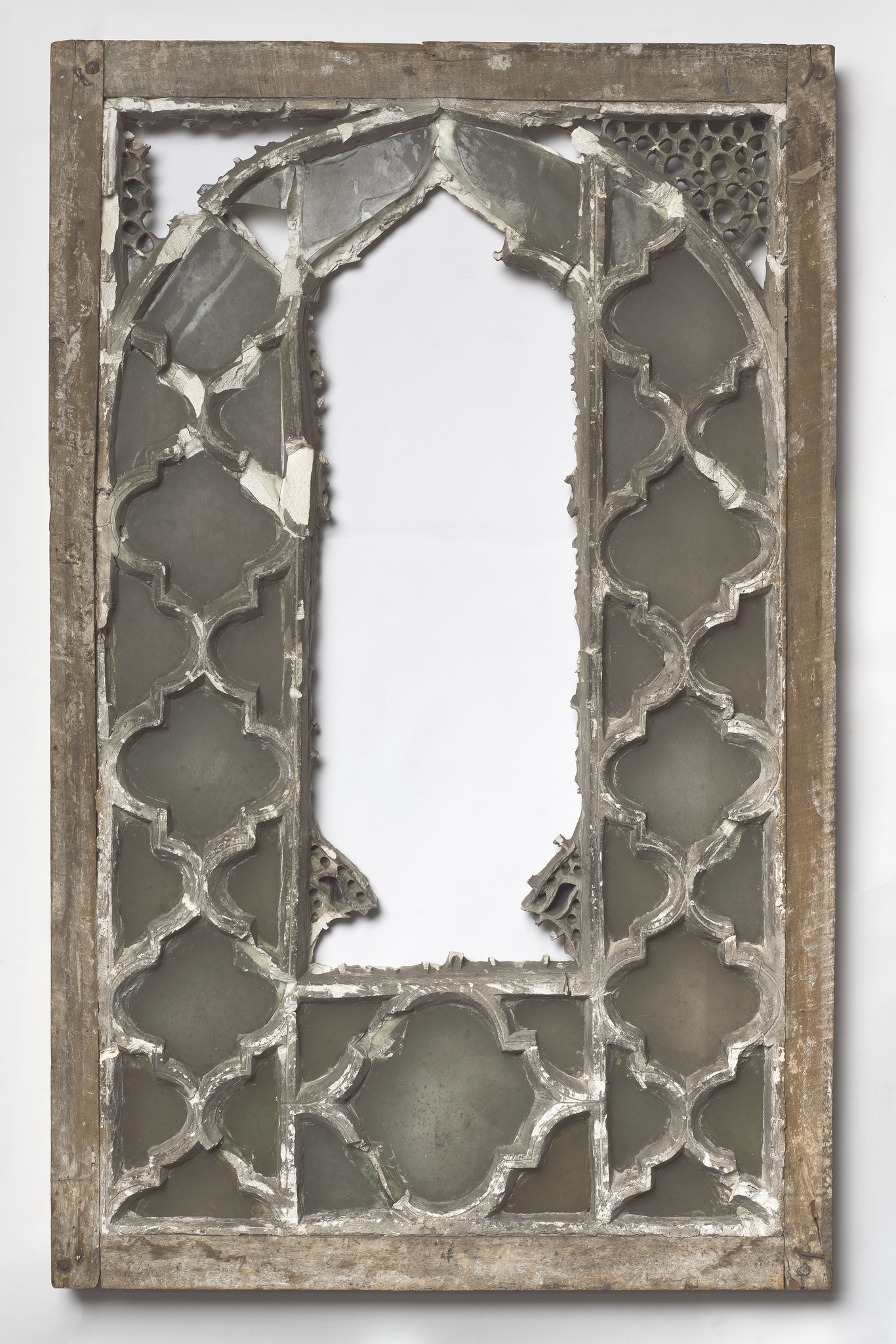
IG_369: Stucco and glass window, formerly with flowers in a vase
(AUT_Wien_MAK_IG_369_1)

Coordonnées

Prière de compléter le champ "Prénom".
Prière de compléter le champ "Nom".
Prière de compléter le champ "E-Mail".
Votre adresse e-mail n'est pas valide.

Veuillez s’il vous plaît indiquer autant d’informations que possible (titre de la publication, base de données, éditeur, nombre d’exemplaires, année de parution, etc.)

Le Vitrocentre Romont ne peut mettre à votre disposition que ses propres images. Nous ne pouvons malheureusement pas vous fournir des images de tiers. Si votre commande concerne des photographies de tiers, nous vous enverrons volontiers l'adresse de contact où vous pourrez obtenir les images.

Les données personnelles que vous avez indiquées dans ce formulaire sont utilisées par le Vitrocentre Romont exclusivement pour le traitement de votre commande d'images. La correspondance relative à la commande est archivée à des fins de traçabilité interne. Les données ne seront utilisées à aucune autre fin que celles énumérées ici, ni transmises à des tiers. En envoyant un formulaire de commande, vous acceptez tacitement cette utilisation de vos données personnelles.

Pour toute question complémentaire, veuillez contacter info@vitrosearch.ch.

Titre

Stucco and glass window, formerly with flowers in a vase

Type d'objet
Dimensions
96 x 60 cm (with frame)
Artiste
Lieu de production
Datation
12th century AH / 18th century CE
Lieu
Numéro d'inventaire
OR 3615
Projet de recherche
Auteur·e et date de la notice
Francine Giese, Sophie Wolf 2025

Iconographie

Description

Rectangular stucco and glass window composed of an arch-shaped ornamental stucco lattice with large pieces of colourless glass surrounding a polygonal central field (largely lost). The spandrels above the arch are decorated with floral ornament.

Fragments of the main motif of the window have survived along the edges of the missing central field. Parts of a blue flower, preserved at the lower right and left of the field, as well as a vase foot preserved in the negative, suggest that this may have been a flower-and-vase motif.

The ornamental latticework around the central motif is designed differently on the inside of the window (front) than on the outside (back). While the stucco lattice on the outside has a simple diamond-shaped decor, the one on the inside has a more intricate, Baroque-style design. The part on the outside is reinforced with iron bars and thick lead wire.

The window is preserved in its original wooden frame. On the inside, the stucco lattice is flush with the frame; on the outside, the wooden frame is covered by the profiled edge of the latticework.

The window is heavily damaged (see Restoration).

Code Iconclass
41A6711 · fleurs dans un vase
48A9813 · ornement ~ formes rondes et courbées
Mot-clés Iconclass

Matériaux, technique et état de conservation

Matériaux

Gypsum plaster; colourless glass; coloured glass (blue, green, yellow, red); wood; iron reinforcement; lead wire

Technique

This stucco and glass window appears to combine two techniques. The ornamental latticework around the central motif – consisting of a delicate stucco structure holding large pieces of colourless sheet glass – was made entirely using the casting technique. The motif of central field and the decor of the spandrels above the arch were not cast, but cut out of the solid centre of the latticework using sharp tools.

This casting technique involves the use of clay or wood forms shaped to match the openings in the stucco. The plaster is poured into the spaces between the forms and the glass pieces are directly embedded in the latticework during the moulding process (see Arseven, 1939, pp. 207–211; Arseven, [c.1952], pp. 182–189; Özakın, 2007, pp. 95–97). The latticework is held in a simple wood frame, which served as a moulding frame during casting. To increase stability, the main structure of the stucco lattice has been reinforced with iron bars; the finer stucco elements were reinforced with thick lead wire.

The central motif was worked out in relief against a perforated background set 7mm back from the surface. The holes have a diameter of c.7mm. The distance between the holes is 2–4mm. The small pieces of coloured and colourless glass are attached to the flat back of the panel using a thin layer of stucco.

The colourless glass has a greenish tint and shows numerous, elongated bubble inclusions. The surface of some of the pieces is uneven. Some pieces show straight edges with a round profile. This, and the shape and orientation of the bubbles, indicate that the sheet glass was produced using the broad-sheet method. The thickness of the colourless glass is 1–1.5mm. The coloured glass used in the central motif and the spandrel has a more even surface and is slightly thicker (c.2mm).

Etat de conservation et restaurations

The window is severly damaged. Of the motif in the central field only small fragments have survived, along the edges; the decoration in the left-hand spandrel (when facing the front) above the arch is also largely missing. The ornamental latticework around the central field is fractured and shows losses on both sides. On the outside, the reinforcing irons are exposed in several places, particularly in the frame area.

Historique de l'oeuvre

Recherche

The presumed depiction of flowers in a vase in the main field of this window is one of the standard types of qamariyya widespread in the Middle East during the Ottoman period. Similar windows can be found in several of the collections studied (see for instance IG_7, IG_166, IG_178, IG_255, IG_356).

The representation of flowers in a vase is a widespread motif in Islamic arts. It can be found in numerous other media, such as ceramics, wood panelling, wall paintings, and textiles, over a long period of time, and in both sacred and profane contexts.

Among the most sophisticated examples of stucco and glass windows with the vase motif are those in the apartments of the Crown Prince at the Topkapı Sarayı (early 17th century, date of the windows uncertain) and those in the Sultan’s Lodge (Hünkâr Kasrı) of the Yeni Cami (1661–1663, date of the windows uncertain), both in Istanbul.

Western artists and architects took an interest in stucco and glass windows with the flowers-and-vase motif, as is attested by a significant number of book illustrations, sketches, and paintings (see for instance IG_43, IG_118, IG_149, IG_153, IG_437, IG_443, IG_461), as well as by the replicas of such windows installed in Arab-style interiors across Europe (see for instance IG_54–56, IG_58–59, IG_64, IG_371–372, IG_431, IG_484).

The window discussed here differs from most of these examples on account of its large ornamental frame, which documents the ongoing transformation of Ottoman art and architecture, initiated in the capital in the late 16th century (Bakırer, 2001, pp. 8–15). Comparable ornamentation can be observed, for example, in one of the exterior stucco and glass windows (dişlık) that the Turkish painter, writer, and politician Celal Esad Arseven (1875–1971) illustrated in his influential publication Les arts decoratifs turcs (Arseven, [c.1952], pp. 183–184, fig. 453.4, see also fig. 458) and attributed to the so-called Tulip Period (‘lâle devri’, 1718–1730). Although the combination of a figurative motif with perforated background in the main field and an ornamental frame with large pieces of colourless glass is rare, it can nevertheless be assumed that this window was made in a workshop in Turkey. This assumption is supported by the manufacturing technique. Unlike windows made in Egypt or the Maghreb, the stucco lattice of this window was cast and not carved. Using clay or wooden moulds shaped to match the design of the window, the pieces of glass are clamped between the mouldings of the stucco grille (Arseven, 1939, pp. 207–211; Arseven, [c.1952], pp. 182–189; Özakın, 2007, pp. 95–97). This technique was widespread in Turkey from the 18th century, as was the use of larger, often colourless pieces of glass, reminiscent of the developments in Baroque stained glass. It is therefore very probable that this window was made in the Ottoman capital.

Due to the lack of documentation, the date on which the window entered a museum collection and its provenance are unknown. What is clear so far is that it formed part of the collection of the Orientalisches Museum in Vienna, founded in 1874 (from 1886 the Handelsmuseum), and was subsequently transferred, together with other stucco and glass windows, to the k.k. Österreichisches Museum für Kunst und Industrie (today the MAK – Museum für angewandte Kunst) in 1907, on the initiative of Arthur von Scala (1845–1909), who in 1897 became the new director of the k.k. Österreichisches Museum für Kunst und Industrie (Wieninger, 2012).

Datation
12th century AH / 18th century CE
Période
1700 – 1799
Sites antérieures
Lieu de production

Provenance

Propriétaire
Dès 1907: Museum für angewandte Kunst MAK, Numéro d'inventaire: OR 3615, Vienne (Autriche)
Propriétaire précédent·e
jusque 1886: Orientalisches Museum (Wien), Vienne (Autriche). date of acquisition unknown

Bibliographie et sources

Bibliographie

Arseven, C. E. (1939). L’art turc depuis son origine jusqu’à nos jours. Istanbul.

Arseven, C. E. [c. 1952]. Les arts decoratifs turcs. Istanbul.

Bakırer, Ö. (2001): Window Glass in Ottoman Vernacular Architecture. EJOS, 4/9, 1–29.

Özakın, R. (2007). Traditional Turkish Gypsum Plaster Windows. Manufacture and Conservation. In: Pilosi, L. (ed.). Glass and ceramics conservation, Nova Gorica.

Wieninger, J. (2012). Das Orientalische Museum in Wien: 1874–1906. Austriaca, 37, 143–158.

Informations sur l'image

Nom de l'image
AUT_Wien_MAK_IG_369_1
Crédits photographiques
© MAK/Georg Mayer
Date de la photographie
2024

Proposition de citation

Giese, F., & Wolf, S. (2025). Stucco and glass window, formerly with flowers in a vase. Dans Vitrosearch. Consulté le 5 décembre 2025 de https://vitrosearch.ch/objects/2713213.

Informations sur l’enregistrement

Numéro de référence
IG_369