Image Ordered

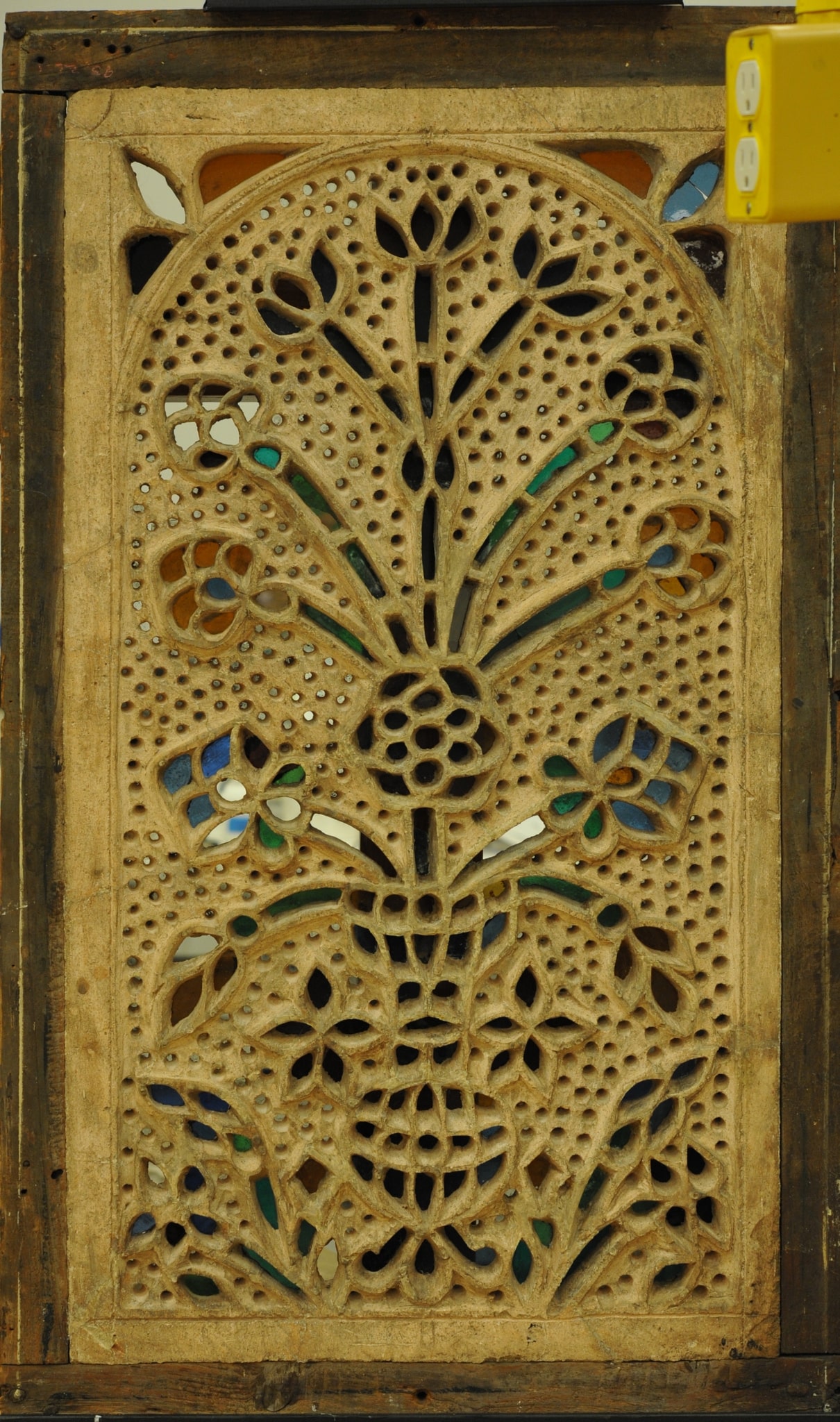
IG_176: Stucco glass window with flowers in a vase
(USA_NewYork_MetropolitanMuseumOfArt_IG_176)

Contact Details

Please specify your first name.
Please specify your name.
Please specify your e-mail address.
The e-mail address is invalid.

Please provide as much information as possible (publication title, database, publisher, edition, year of publication, etc.).

The Vitrocentre Romont can only provide you with its own photographs. We regret that we cannot supply images from third parties to you. If your order concerns photographs from third parties, we will send you the contact address from which the images can be obtained.

The personal data you provide in this form will be used by Vitrocentre Romont exclusively for the processing of your image order. Correspondence regarding the order will be archived for internal reference. The data will not be used for purposes other than those listed here, nor will it be passed on to third parties. By sending the order form, you agree to this use of your personal data.

Should you have any questions, please send us an e-mail: info@vitrosearch.ch.

Title

Stucco glass window with flowers in a vase

Type of Object
Dimensions
85.1 x 46.7 x 2.2 cm (with frame, the depth varies between 2.0–2.2 cm)
Artist / Producer
Place of Manufacture
Dating
early 13th–early 14th centuries AH / 19th century CE
Location
Inventory Number
93.26.1
Research Project
Author and Date of Entry
Francine Giese, Sophie Wolf 2025

Iconography

Description

Rectangular stucco and glass window showing flowers in a vase. The flowers are arranged symmetrically along the central axis. Despite their stylized depiction, the species of some of the flowers in the vase (roses and lilies) is recognizable. The area to the right and left of the vase is filled with six more flowers. The vase is flanked on either side by two flower stems that spring from the bottom of the panel and two five-petalled blossoms flanking the neck of the vase. The motif is set against a slightly recessed, perforated background, and framed by a semicircular arch. The spandrels above the arch are adorned by three-petalled floral ornament.

The stucco and glass window is preserved in its original wooden frame. The front of the stucco panel is slightly curved forwards, i.e. slightly convex.

Iconclass Code
25G41(LILY) · flowers: lily
25G41(ROSE) · flowers: rose
41A6711 · flowers in a vase
48A9854 · vase ~ ornament
Iconclass Keywords

Materials, Technique and State of Preservation

Materials

Coarse-grained gypsum plaster; colourless glass (with a greyish or greenish tint); coloured glass (three shades of green, two shades of blue, two shades of yellow including orange colour, purple)

Technique

The latticework was carved into a rectangular stucco panel with a porous surface and inlaid with colourless and coloured sheet glass. The pieces of glass are fixed onto the back of the lattice with a thin layer (c.1mm) of gypsum plaster. The thickness of the stucco panel is c.20–22mm. The stucco panel was cast in a wooden frame. The dimensions of the frame are c.50 × 40 × 30mm.

The design of the latticework has two levels. The main motif (level 0) has been carved out of the stucco panel with sharp, knife-like tools following a template incised in the surface of the panel. Traces of the incisions are still visible in some places on the front. The second level (level –1), which lies 7–10mm below level 0, consists of regularly spaced perforations. The holes were pierced with a metal or wooden pin in the stucco before it was fully set. They vary between 10 and 12mm in diameter and are slightly tapered towards the back. The distance between the holes is 5–7mm. All holes are backed with colourless glass. The main design and the perforations have been worked in such a way that the incident light is directed downwards into the room.

The pieces of glass were cut according to the design of the latticework using a glass-cutter. The glass sheets from which the pieces were cut are mouth-blown. A few pieces of glass show uneven surfaces and elongated, parallel bubbles; several pieces have straight edges with a round profile, which probably corresponds to the edge of the original glass sheet from which the piece was cut. These features suggest that the sheet glass was produced using the broad-sheet method. The coloured glass (1.5–3mm) is slightly thicker than the colourless (c.1mm).

State of Preservations and Restorations

The stucco latticework shows a few small fissures (in three of the four the corners), but is intact. Several pieces of glass are missing. There are signs of earlier restorations. These repairs involved refixing loose pieces of glass with adhesive and supplementing the thin plaster layer in which the pieces of glass are embedded with various materials. Gaps or losses along the edges at the back were filled with plaster. Areas have been partially retouched with light brown paint. The corners of the wooden frame has been reinforced with metal brackets.

History

Research

This stucco and glass window was produced according to the traditional method used in the manufacture of qamariyyāt in North Africa to this day (see Technique) and represents of motif that was widespread in Egypt during the Ottoman period. Similar windows have survived in several of the collections studied (see for instance IG_7, IG_166, IG_178, IG_255, IG_356).

The representation of flowers in a vase is a widespread motif in Islamic arts. It can be found across numerous media, such as ceramics, wood panelling, wall paintings, textiles or stucco and glass windows, over a long period in both sacred and profane contexts. Among the most sophisticated examples are the stucco and glass windows from the apartments of the Crown Prince at the Topkapı Serail (early 17th century CE, date of the windows uncertain) and the Sultan’s Lodge (Hünkâr Kasrı) of the Yeni Cami (1661–1663 CE, date of the windows uncertain), both in Istanbul.

In the 19th century, windows with this motif were very popular with Western architects and artists. The growing interest in such windows is evidenced by numerous book illustrations, sketches and paintings (see for instance IG_43, IG_118, IG_149, IG_153, IG_437, IG_443, IG_461), as well as by the replicas of such windows installed in Arab-style interiors across Europe (IG_54IG_59, IG_64, IG_91, IG_431).

The window discussed here shows a traditional composition arranged along a central axis. The design is of comparatively high quality, as individual flowers can be recognized.

According to the museum records, the window dates to the 17th century. If the window had actually been installed in a building in the 18th century, we would have expected to observe clearer traces of weathering.

A hand-written letter dated 22 May 1893 to Luigi Palma di Cesnola (1832–1904), the then director of The Metropolitan Museum of Art in New York provides information on the provenance of the window. The author of this letter, the American architect William Robert Ware (1832–1915), writes that he had acquired this and various other windows in the spring of 1890 from several well-known art and antiquity dealers in Cairo. He mentions [Gaspare] Giuliana, [E. M.] Malluk, [Nicolas?] Tano, and [Panayotis] Kyticas (on their commercial activities see Volait, 2021, pp. 60–64). In his letter, Ware further states that he was told that the windows ‘had been taken from old houses’ and ‘from old mosques, that had been dismantled’, but that he was not able to get ‘any precise information as to their original places’ (Ware, 1893).

In 1893, Ware donated this window as part of a lot of 17 qamariyyāt (IG_169, IG_171–186) to The Metropolitan Museum of Art (Ware, 1893).

Dating
early 13th–early 14th centuries AH / 19th century CE
Period
1800 – 1899
Previous Locations
Place of Manufacture

Provenance

Owner
Since 1893: The Metropolitan Museum of Art, Inventory Number: 93.26.1, collection (access date: 6.12.2024), New York (United States of America), Donation
Previous Owner
From 1890 until 1893: Ware, William Robert

Bibliography and Sources

Literature

Herz, M. (1902). Le musée national du Caire. Gazette des Beaux-Arts, 3. Pér. 28, 45–59, 497–505.

Volait, M. (2021). Antique Dealing and Creative Reuse in Cairo and Damascus 1850–1890. Leiden: Brill.

Ware, W. R. (1893, May 22). [Letter to Luigi Palma di Cesnola]. MET Archives (W 229), New York City, NY, United States.

Image Information

Name of Image
USA_NewYork_MetropolitanMuseumOfArt_IG_176
Credits
Vitrocentre Romont
Date
2023
Copyright
Public Domain

Citation suggestion

Giese, F., & Wolf, S. (2025). Stucco glass window with flowers in a vase. In Vitrosearch. Retrieved December 5, 2025 from https://vitrosearch.ch/objects/2713020.

Record Information

Reference Number
IG_176