Image commandée

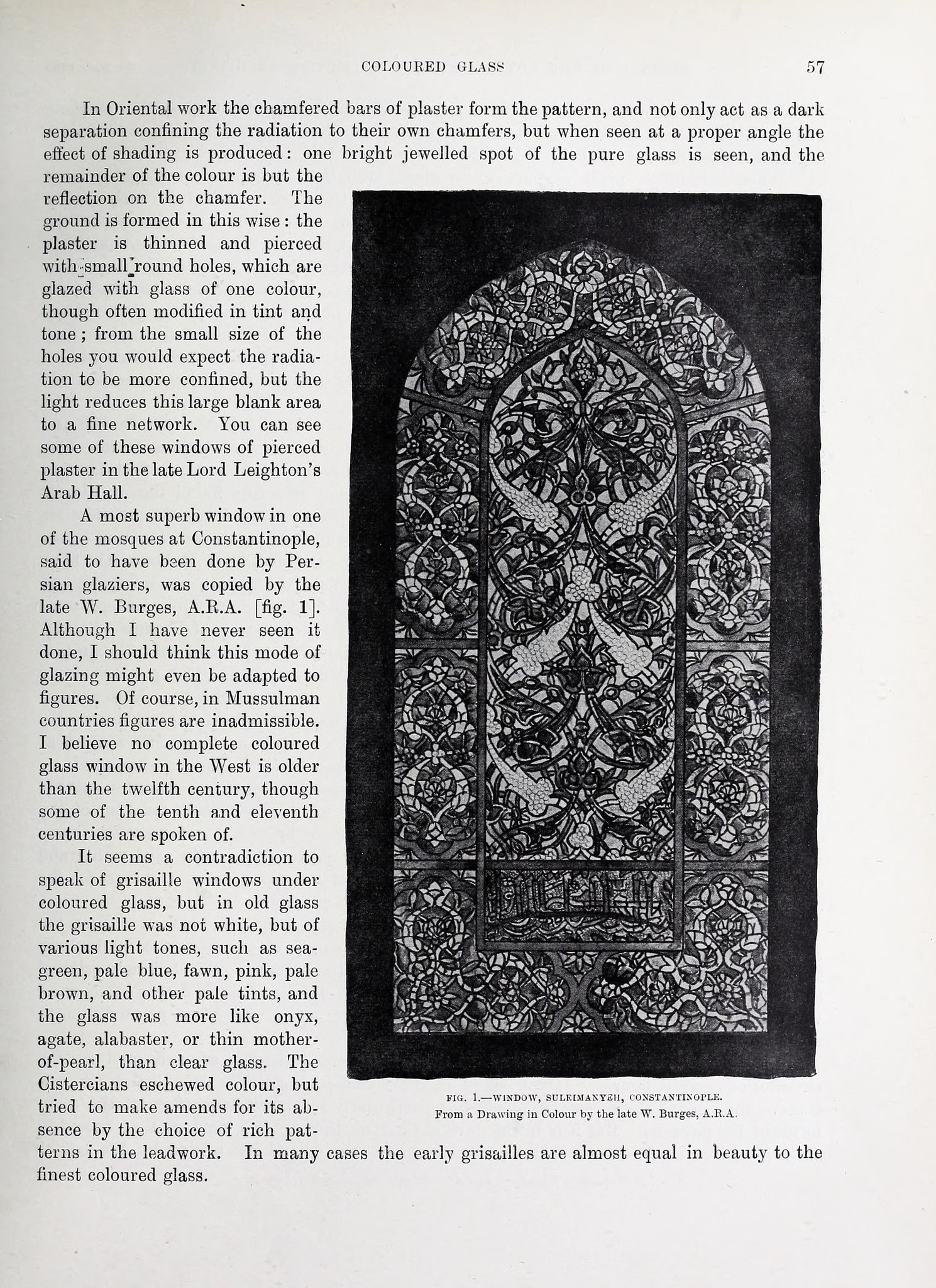
IG_91: ‘Window, Suleimanyeh, Constantinople’
(MISC_IG_Aitchison_IG_91)

Coordonnées

Prière de compléter le champ "Prénom".
Prière de compléter le champ "Nom".
Prière de compléter le champ "E-Mail".
Votre adresse e-mail n'est pas valide.

Veuillez s’il vous plaît indiquer autant d’informations que possible (titre de la publication, base de données, éditeur, nombre d’exemplaires, année de parution, etc.)

Le Vitrocentre Romont ne peut mettre à votre disposition que ses propres images. Nous ne pouvons malheureusement pas vous fournir des images de tiers. Si votre commande concerne des photographies de tiers, nous vous enverrons volontiers l'adresse de contact où vous pourrez obtenir les images.

Les données personnelles que vous avez indiquées dans ce formulaire sont utilisées par le Vitrocentre Romont exclusivement pour le traitement de votre commande d'images. La correspondance relative à la commande est archivée à des fins de traçabilité interne. Les données ne seront utilisées à aucune autre fin que celles énumérées ici, ni transmises à des tiers. En envoyant un formulaire de commande, vous acceptez tacitement cette utilisation de vos données personnelles.

Pour toute question complémentaire, veuillez contacter info@vitrosearch.ch.

Titre

‘Window, Suleimanyeh, Constantinople’

Type d'objet
Artiste
Datation
1858/1904
Projet de recherche
Auteur·e et date de la notice
Sarah Keller 2025

Iconographie

Description

Fig. 1 in George Aitchison, Coloured Glass, The Architectural Journal XI(3), pp. 53–65. The caption identifies the illustration as a reproduction of a drawing by William Burges of a window in the Süleymaniye Mosque in Istanbul. It is a large pointed arch window consisting of a frame composed of several polylobed segments around a central panel with an inscription at the bottom edge. Floral arabesques fill the compartments.

Code Iconclass
25G41 · fleurs
49L142 · écriture arabique
49L8 · inscription
Mot-clés Iconclass

Historique de l'oeuvre

Recherche

In 1904, the British architect George Aitchison published an article on the origin and history of stained glass. Aitchison published regularly on architecture, especially in the journal The Builder, however on the issue of glass, this is the sole contribution.
After dealing with the origin of glass and its use for windows in ancient times, the architect distinguishes two types of windows: “Coloured glass windows may be divided into two grand divisions—the Eastern and the Western; the Eastern formed by the insertion of thin unshaded coloured glass into, or on to, patterns cut in stone, marble, or plaster; and the Western, where the glass is fitted into lead frames and shaded [...]” (p. 56). He continues describing the oblique carving of stucco and glass windows and refers to the windows in the Arab hall of Lord Leigthon’s house (IG_54IG_57). An illustration shows a drawing made by Aitchison’s friend William Burges (1827–1881) of a stucco and glass window of the Süleymaniye mosque in Istanbul. Aitchison explains that the “superb window” is “said to have been done by Persian glaziers”, and “although I have never seen it done, I should think this mode of glazing might even be adapted to figures.” (p. 57).
In the following, he writes mainly about medieval stained glass in France, Italy and England, discusses their colour effects and the materiality of the glass, and finally addresses practical questions of application in contemporary architecture.

In 1858, a drawing by William Burges of a window of the Süleymaniye mosque’s qibla wall, made on the spot, was exhibited at the Architectural Exhibition at Suffolk Street in London. At the same exhibition a partial replica of a window made by Nathaniel Wood Lavers (1828–1911) and produced under the direction of Burges and Charles Winston was placed in the lantern of the exhibition room. As Burges specifies in an article in The Builder (1858, p. 90), the window he drew had a pattern in white, which ‘takes the form of a thin flowing line bursting out into leaves of pearls’. Burges’ mentions a second drawing, of the central part of a window, with a more intricate pattern, in which the white is applied as ‘a powdering of flowers more or less frequent in various parts’ (see IG_189). The white pattern with flowing lines evolving into ‘leaves of pearls’ can clearly be seen on the black and white illustration of Aitichson’s article. Still today, the two outer of the nine windows arranged around the mihrab show the design depicted by Burges. Probably these windows are preserved in their original design from the times of the mosque’s erection (957– 964 AH / 1550–1557 CE; Flood, 1993, p. 168–169; Irteş, 2007, pp. 296, 298).

Datation
1858/1904
Période
1858 – 1904
Sites liées
Lieu de production

Bibliographie et sources

Bibliographie

Aitchison, G. (1904). Coloured Glass. The Architectural Journal XI(3), 53–65.

Burges, W. (1858). Architectural experiences at Constantinople. The Builder, vol. XVI, n° 783–784, 88–90, 104–108.

Flood, F. B. (1993). Palaces of crystal, sanctuaries of light: windows, jewels and glass in medieval islamic architecture [PhD thesis, University of Edinburg]. Edinburgh College of Art thesis and dissertation collection. https://era.ed.ac.uk/handle/1842/19754

Irteş, S. (2007). Kalemişi, Cam ve Revzen. In S. Mülayim (Ed.), Bir Şaheser Süleymaniye Külliyesi (pp. 293–328). T. C. Kültür ve Turizm Bakanlığı Yayınları.

Informations sur l'image

Nom de l'image
MISC_IG_Aitchison_IG_91
Crédits photographiques
Aitchison, 1904, p. 57. Retrieved from https://archive.org/details/journalofroyalin1119roya/page/56/mode/2up

Proposition de citation

Keller, S. (2025). ‘Window, Suleimanyeh, Constantinople’. Dans Vitrosearch. Consulté le 5 décembre 2025 de https://vitrosearch.ch/objects/2712935.

Informations sur l’enregistrement

Numéro de référence
IG_91