Image Ordered

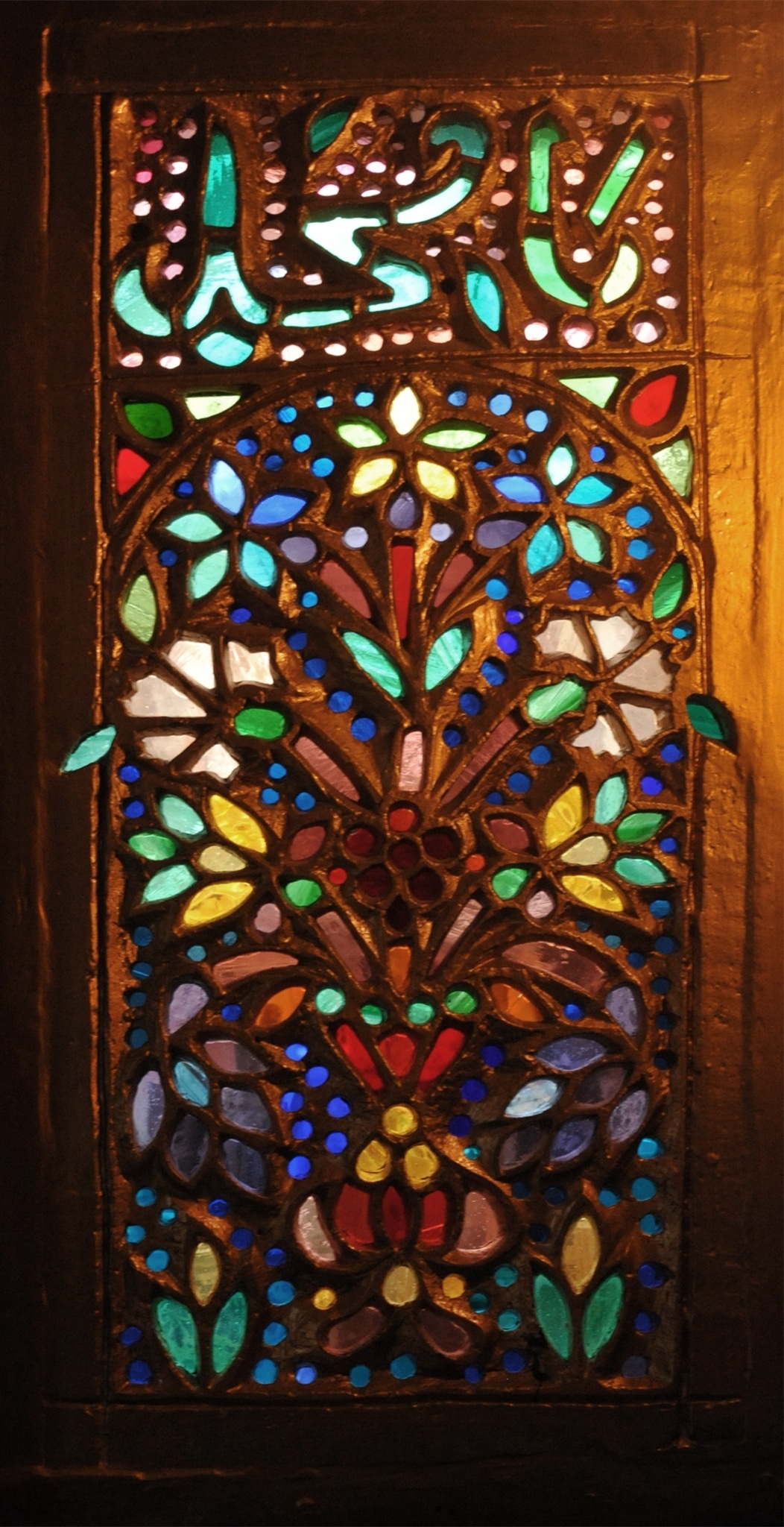
IG_58: Replica of a stucco and glass window with flowers in a vase and inscription
(GBR_London_LeightonHouse_IG_58)

Contact Details

Please specify your first name.
Please specify your name.
Please specify your e-mail address.
The e-mail address is invalid.

Please provide as much information as possible (publication title, database, publisher, edition, year of publication, etc.).

The Vitrocentre Romont can only provide you with its own photographs. We regret that we cannot supply images from third parties to you. If your order concerns photographs from third parties, we will send you the contact address from which the images can be obtained.

The personal data you provide in this form will be used by Vitrocentre Romont exclusively for the processing of your image order. Correspondence regarding the order will be archived for internal reference. The data will not be used for purposes other than those listed here, nor will it be passed on to third parties. By sending the order form, you agree to this use of your personal data.

Should you have any questions, please send us an e-mail: info@vitrosearch.ch.

Title

Replica of a stucco and glass window with flowers in a vase and inscription

Type of Object
Dimensions
98 x 61 cm (window); 89 x 41 cm (stucco panel)
Artist / Producer
Aitchison, George · design and execution
Dating
1870
Location
Place
Eastern wall
Research Project
Author and Date of Entry
Francine Giese, Laura Emunds, Omar Anchassi, Sophie Wolf 2025

Iconography

Description

Stucco and glass window composed of two main zones: a narrow upper zone with an Arabic inscription (see Inscription) backed with green glass, and a much larger lower zone where the main motif consists of nine flowers in a vase. The flowers are arranged symmetrically and depicted in a stylized manner. Among the flowers, carnations, lilies, and hyacinths are recognizable. The vase is flanked by a trifoliate plant on each side and framed by a semicircular arch. At the height of the carnations, petals extend into the uncarved edge area of the stucco panel. An egg-shaped element is placed in the centre of the spandrels. The flowers in a vase, the trifoliate plants, and the inscription are worked in relief against a perforated background, which is slightly recessed. The perforations are backed with coloured glass.

Iconclass Code
25G41(CARNATION) · flowers: carnation
25G41(HYACINTH) · flowers: hyacinth
25G41(LILY) · flowers: lily
41A6711 · flowers in a vase
49L142 · Arabic script
49L8 · inscription
Iconclass Keywords
Inscription

yā Muḥammad (O Muḥammad)

Materials, Technique and State of Preservation

Materials

Gypsum plaster; coloured glass (three shades of green, four shades of blue, orange, two shades of yellow, two shades of purple, three shades of rose/pink, turquoise, two shades of red flashed glass)

Technique

Latticework carved into a rectangular stucco panel and inlaid with coloured pieces of glass. The pieces of glass are fixed on the back of the lattice with a thin layer of gypsum plaster. The plaster layer is painted gray; there are traces of a transparent, glue-like substance on the back. We suspect that the gray paint and the traces of glue date from the last major restoration (1988?). The front of the stucco panel is uneven and slightly bulging towards the centre. The panel has a thickness of 25–28 mm. The panel was created by pouring the stucco into a wooden frame measuring 98 × 49 × 3cm.

The design of the latticework has two levels: the main motif (level 0) has been carved out of the stucco panel with a sharp, knife-like tool. The second level (level –1), which lies approximately 5–8 mm below level 0, shows irregularly spaced, conical perforations. The holes were pierced with a metal or wooden pin in the stucco before it was fully set. They vary approximately 10–15mm in diameter. The distance between the holes is 5–10mm.
Unlike most of the studied stucco and glass windows manufactured in the Islamic world, the holes are backed with coloured instead of colourless glass. Moreover, the main design and the perforations have not been worked at an angle in order to project the incident light downwards into the room. At an unspecified time, but probably when it was reused in the 19th century, the front of the latticework and the wooden frame were painted with gold paint.

All glass is coloured in the mass. The blue pieces of glass have red streaks. The pieces of glass show the typical features of cylinder-blown ‘antique glass’: elongated parallel bubbles and criss-cross lines on the surface (so-called planing marks, Hobelspuren). The pieces of glass were cut according to the design of the latticework using a glass-cutter. Some of the pieces show grozed edges.

State of Preservations and Restorations

The window was restored several times over the course of the 20th century. A major restoration campaign took place between 2008 and 2010 (see Robbins, 2010, pp. 62–85; Vanoli, 2012). As the windows of the studio extension are not mentioned in the available sources, it is unclear what restorations measures were carried out.

History

Research

This replica of a stucco and glass window, located in the east wall of the Studio extension of Leighton House, forms a pair with IG_59. Both windows have largely identical design and dimensions. They are composed of two zones. The lower zone is reminiscent of one of the most popular motifs of Islamic stucco and glass windows during the Ottoman period: flowers in a vase. This motif is widespread in Islamic decorative arts and can be found in numerous other media, such as ceramics, wood panelling, wall paintings, and textiles, over a long period of time, and in both sacred and profane contexts. The upper zone shows the Arabic inscription yā Muḥammad (‘O Muḥammad’). The saying is an invocation of Muḥammad, the prophet of Islam.

Whereas stucco and glass panels with inscriptions are rarely represented in museum collections (IG_174, IG_292, IG_493IG_496), the flowers-in-a-vase motif is found in several stucco and glass windows in the collections studied (see for instance IG_7, IG_166, IG_176, IG_255, IG_261, IG_356). They also aroused the interest of Western artists and architects, as is attested by a significant number of book illustrations, sketches, and paintings (see for instance IG_43, IG_149, IG_153, IG_437, IG_443, IG_461). As of the 1850s, replicas with this motif were installed in Arab-style interiors across Europe (IG_64, IG_431, IG_484IG_487).

Some differences from traditional qamarīyāt, such as the inscription being backed with green instead of yellow glass and the perforations with coloured instead of clear glass, as well as the way in which the petals extend into the uncarved edge area of the stucco panel, suggest that this window was the work of a Western designer. This contradicts Melanie Gibson’s assumption that it is an Egyptian qamarīya, acquired by the Victorian artist and collector Frederic Leighton (1830–1896) during his trip to Cairo in 1868 (Gibson, 2020, p. 3). Thanks to an annotation on the window’s design conserved at the Royal Institute of British Architects (RIBA) and dated 15 February 1870 (IG_50), it can be confirmed that this window is a replica made by the British architect George Aitchison (1825–1910). Aitchison was one of Leighton’s close friends, for whom he designed Leighton House at 12 Holland Park Road in Kensington (London), executed between 1865 and 1895 in five construction phases.

Leighton House is one of the most famous 19th-century artist’s homes, combining living, working, and exhibition spaces, designed according to Leighton’s needs and aesthetic visions (Sweetman, 1988, pp. 189–192; Robbins/Suleman, 2005; Robbins, 2011; Anderson, 2011; Droth, 2011; Vanoli, 2012; Roberts, 2018; Gibson, 2020; Robbins, 2023). Leighton’s studio-house reflects the exotic taste of the time (Walkley, 1994, pp. 52–56), which finds close parallels in the now-lost studio of the British painter Frank Dillon (1832–1908). Dillon, who visited Cairo on several occasions in the 1850s – 1870s, recreated a Cairene interior with wall tiles, wooden furnishings, and two stucco and glass windows in his studio in Kensington (Conway, 1882, p. 196; Walkley, 1994, p. 70), as attested by a wood engraving published in the second volume of Georg Ebers’s Aegypten in Bild und Wort (Ebers, 1880, p. 96, see IG_117).

Although executed almost a decade before the famous Arab Hall (1877–1881), the Studio extension of Leighton House, constructed in 1869–1870, can nevertheless be seen as a prelude to the Arab-style interior that was to follow. While Leighton was familiar with Islamic art and architecture through his travels to Sicily, Algeria, Turkey, Egypt, Syria, Spain, and Morocco, Aitchison was acquainted with Cairo, among other Islamic cities, where he examined traditional houses. He shared his observations during the discussion following the paper on ‘Persian Architecture and Construction’ given by Caspar Purdon Clarke (1846–1911) and Thomas Hayter Lewis (1818–1898) at the Royal Institute of British Architects on 31 January 1881. On this occasion, Aitchison described the iconographic and technical characteristics of Egyptian qamarīyāt and their sparkling light effects and added that ‘many [were] executed for me in London’ (Purdon Clarke & Hayter Lewis, 1881, pp. 173–174) – most probably referring to the Leighton House replicas. More than 20 years later, in 1904, Aitchison returned to the subject of stucco and glass windows in his essay ‘Coloured Glass’, where he compared Western stained glass with qamarīyāt and mentioned Leighton House with its ‘windows of pierced plaster’ as an example illustrating the Islamic tradition (Aitchison, 1904, p. 57, see IG_91).

Aitchison seems to have been intensively involved with stucco and glass windows and their execution in Britain at the time the Studio extension was carried out, as a design for the Knoyle Schools in Semley (Wiltshire) conserved at the Royal Institute of British Architects (RIBA) attests. In this design (RIBA69211), also dated 1870, he envisaged the crowning element of a three-lancet window with the flower-in-a-vase motif, which clearly shows Aitchison’s familiarity with the foreign vocabulary, although, in this case, he translated the Islamic prototypes much more freely than in the two replicas of the Studio extension.

The British architect William Burges (1827–1881), who was a long-time friend of Aitchison and Leighton, must have been aware of these replicas when he planned the slightly later windows of the Arab Room at Cardiff Castle in Wales (IG_484IG_487). However, Burges opted to execute the replicas at Cardiff Castle in glass, lead, and wood, whereas Aitchison stuck more closely to the Islamic prototypes – at least as far as the material was concerned. According to contemporary sources, Leighton acquired various stucco and glass windows during his travels to Cairo (1868) and Damascus (1873) (see for instance Anon., 1880; Wright, 1896; Rhys, 1900). Unfortunately, the Egyptian windows were heavily damaged during shipping (Rhys, 1900, p. 100). Such transport damage was apparently not uncommon (see for instance IG_43). As none of the latticeworks had survived the journey, the window openings were closed with ‘English imitations’ (Rhys, 1900, p. 100). Only part of the glass could be reused. These original pieces were used in the replica installed in the west wall of the Arab Hall (IG_56).

William Wright (1837–1899), who procured qamarīyāt ‘from a mosque in Damascus’ (Wright, 1896, p. 184) for Leighton during his visit to the city, adds that the Syrian stucco and glass windows ‘have also been supplemented and matched by coloured glass made in London’ (Wright, 1896, p. 184).

Dating
1870
Commissioner
Previous Locations
Related Locations
Place of Manufacture

Provenance

Bibliography and Sources

Literature

Aitchison, G. (1904). Coloured Glass. The Architectural Journal, XI(3), pp. 53–65.

Anderson, A. (2011). The 'New Old School': Furnishing with Antiques in the Modern Interior–Frederic, Lord Leighton’s Studio-House and Its Collections. Journal of Design History, 24(4), pp. 315–338.

Anon. (1880, October 1). Artists' Homes, No. 7. Sir Frederick Leighton's House and Studio. The Building News, 1880, p. 384.

Barringer, T., & Prettejohn, E. (eds.) (1999). Frederic Leighton: Antiquity Renaissance Modernity (Studies in British Art, 5). New Haven & London: Yale University Press.

Butler, V. (1893, July–December). An Hour at Sir Frederick Leighton's. Lippincott's Monthly Magazine. A Popular Journal of General Literature, Science, and Politics, III, pp. 463–466.

Clarke, C. P., & Hayter Lewis, T. (1881). Persian Architecture and Construction. Transactions of the Royal Institute of British Architects, Session 1880–1881 (pp. 161–174). London: Royal Institute of British Architects.

Conway, M. D. (1882). Travels in South Kensington with Notes on Decorative Art and Architecture in England. London: Trübner & Co.

Droth, M. (2011). Leighton's House: Art In and Beyond the Studio. Journal of Design History, 24(4), 339–358.

Ebers, G. (1880). Aegypten in Bild und Wort. Dargestellt von unseren ersten Künstlern, vol. 2. Stuttgart: Eduard Hallberger.

Edwards, J. (2010). The Lessons of Leighton House: Aesthetics, Politics, Erotics. In Rethinking the Interior, c. 1867–1896. Aestheticism and Arts and Crafts (pp. 85–110). Farnham: Ashgate.

Gibson, M. (2020). ‘An Oriental Kiosk’: The Building of the ‘Arab Hall’ at Leighton House in London. Orientations, 51(2), 2–15.

Rhys, E. (1900). Frederic Lord Leighton. An Illustrated Record of His Life and Work. London.

Robbins, D. (2011). Leighton House Museum. Holland Park Road, Kensington. The Royal Borough of Kensington and Chelsea.

Robbins, D. (2023). Leighton House. Step into a painter's world. The Royal Borough of Kensington and Chelsea.

Robbins, D. (ed.) (2010). Closer to Home. The Restoration of Leighton House and Catalogue of the Reopening Displays. The Royal Borough of Kensington and Chelsea, 2010.

Robbins, D., & Suleman, R. (2005). Leighton House Museum. Holland Park Road, Kensington. The Royal Borough of Kensington and Chelsea Museums and Arts Service.

Roberts, M. (2018). The Resistant Materiality of Frederic Leighton’s Arab Hall. British Art Studies 9. https://dx.doi.org/10.17658/issn.2058-5462/ issue-09/mroberts

Stone, J. H. (1905, October). Leighton House. The English Illustrated Magazine, 3–17.

Sweetman, J. (1988). The Oriental obsession. Islamic inspiration in British and American art and architecture 1500–1920. Cambridge: Cambridge University Press.

Vanoli, D. (2012). The Arab Hall, Leighton House Museum: Restoration and Conservation Works 2008–10. Journal of Architectural Conservation, 18(1), 27–46. https://doi.org/10.1080/13556207.2012.10785102.

Walkley, G. (1994). Artists' Houses in London 1764–1914. Aldershot: Scolar Press.

Wasley, D. (1986). Leighton House. Arab Hall windows, unpublished report, 10 February 1986. London, Leighton House, archives.

Wright, W. (1896). Lord Leighton at Damascus and After. The Bookman, March 1896, 183–185.

Image Information

Name of Image
GBR_London_LeightonHouse_IG_58
Credits
Courtesy of Leighton House, the Royal Borough of Kensington and Chelsea, © Photo: Vitrocentre Romont
Date
2023

Citation suggestion

Giese, F., Emunds, L., Anchassi, O., & Wolf, S. (2025). Replica of a stucco and glass window with flowers in a vase and inscription. In Vitrosearch. Retrieved December 5, 2025 from https://vitrosearch.ch/objects/2712902.

Record Information

Reference Number
IG_58