Image commandée

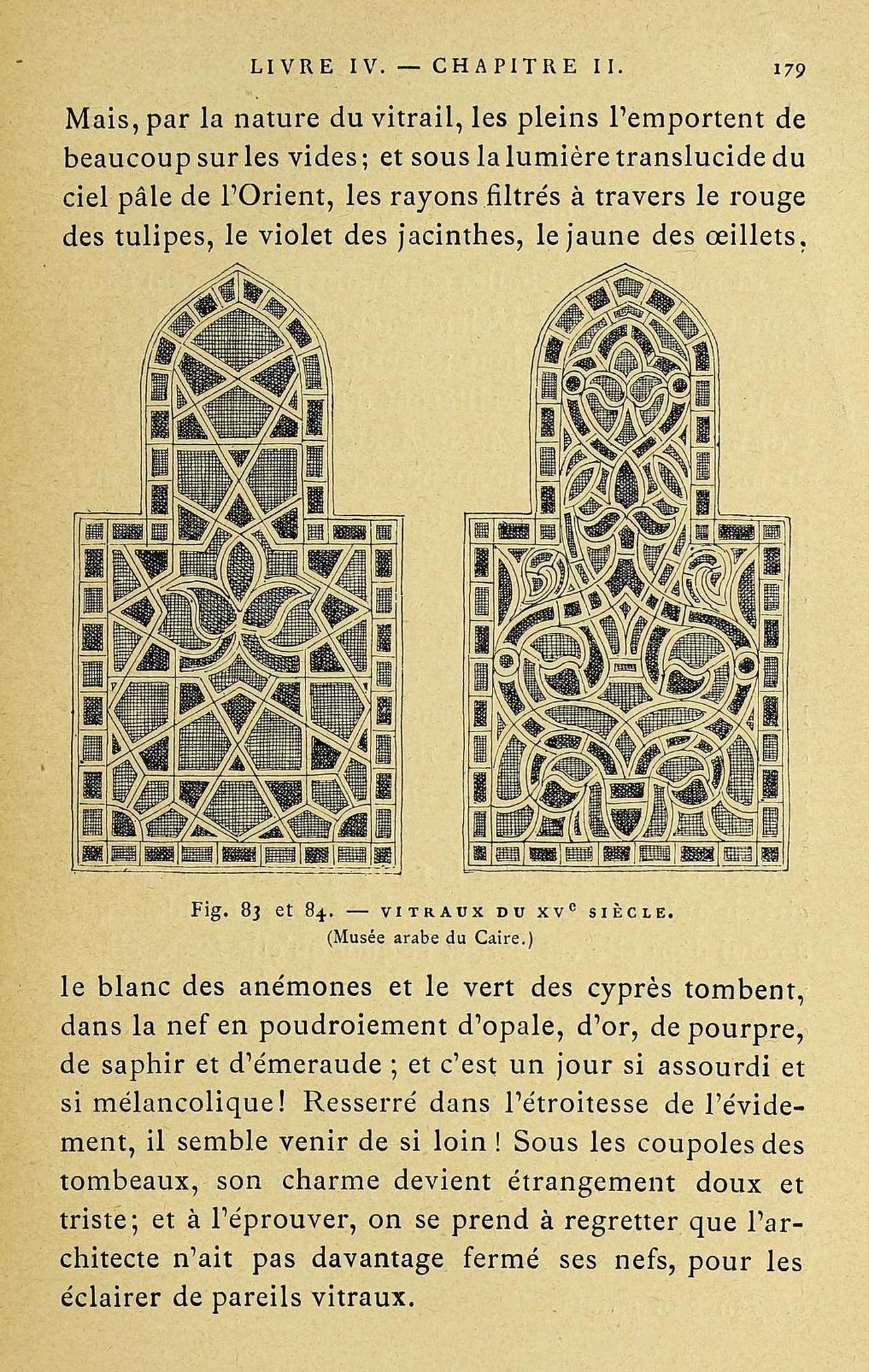
IG_283: Book illustration: Vitraux du XVe siècle (Musée arabe du Caire)
(MISC_IG_Gayet_IG_283)

Coordonnées

Prière de compléter le champ "Prénom".
Prière de compléter le champ "Nom".
Prière de compléter le champ "E-Mail".
Votre adresse e-mail n'est pas valide.

Veuillez s’il vous plaît indiquer autant d’informations que possible (titre de la publication, base de données, éditeur, nombre d’exemplaires, année de parution, etc.)

Le Vitrocentre Romont ne peut mettre à votre disposition que ses propres images. Nous ne pouvons malheureusement pas vous fournir des images de tiers. Si votre commande concerne des photographies de tiers, nous vous enverrons volontiers l'adresse de contact où vous pourrez obtenir les images.

Les données personnelles que vous avez indiquées dans ce formulaire sont utilisées par le Vitrocentre Romont exclusivement pour le traitement de votre commande d'images. La correspondance relative à la commande est archivée à des fins de traçabilité interne. Les données ne seront utilisées à aucune autre fin que celles énumérées ici, ni transmises à des tiers. En envoyant un formulaire de commande, vous acceptez tacitement cette utilisation de vos données personnelles.

Pour toute question complémentaire, veuillez contacter info@vitrosearch.ch.

Titre

‘Vitraux du XVe siècle (Musée arabe du Caire)’

Type d'objet
Dimensions
21 x 12 cm (page)
Artiste
Datation
1893
Projet de recherche
Auteur·e et date de la notice
Sarah Keller 2025

Iconographie

Description

Figs 83 and 84 in Albert Gayet, L’Art arabe, published in 1893 by Ancienne Maison Quantin, Librairies-imprimeries reìunies, May & Motteroz, Paris.
These two stucco and glass windows have a floral design. The left one shows a three-petal flower surrounded by a twelve-pointed star. The right one has a more complex design, consisting of interlacing tendrils that culminate in two three-petal flowers. Both windows have a border of small rectangles.

Code Iconclass
25G41 · fleurs
48A98783 · entrelacs de fleurs ~ ornement
Mot-clés Iconclass

Historique de l'oeuvre

Recherche

In 1893, the French architect and archaeologist Albert Gayet (1856–1916) published a book on Islamic Art, L’Art arabe. Previously, he had been in Cairo as attaché to the Permanent Mission there (now the French Institute of Oriental Archaeology), and he remained for three years. His extensively illustrated publication deals with art and architecture of the Islamic lands from the beginnings until the end of the Mamluk period.
In the chapter ‘Le décor de la mosquée baharite [Bahri Mamluks]’, he discusses the use of stucco and glass windows in mosques in detail and reproduces three of them. He briefly details their manufacture and compares their motifs – bouquets of flowers, cypresses – with those found on faïence. As early examples, he names the stucco and glass windows in the Mosque-Madrasa of Sultan al-Ashraf Barsbay (826 AH / 1424 CE) and of Sultan Qaytbay (877–79 AH / 1472–74 CE). He states further that the Sayyida Zaynab Mosque until recently had windows that were in no way inferior to those in the mosque. Gayet also opines that the windows from the end of the period of the Bahri Mamluks were the most beautiful (pp. 226–227) and highlights that the light effect is that of precious stones: ‘[... ] sous la lumière translucide du ciel pâle de l’Orient, les rayons filtrés à travers le rouge des tulipes, le violet des jacinthes, le jaune des œillets, le blanc des anémones et le vert des cyprès tombent, dans la nef en poudroiement d’opale, d’or, de pourpre, de saphir et d’émeraude.’ (p. 179).
One of the illustrations (fig. 82) depicts the window from the Sayyida Zaynab Mosque in Cairo published by Prisse d’Avennes in 1877 (IG_42). There is no comment on the illustration, but Gayet cites Prisse d’Avennes’ ‘grand ouvrage’ several times. The other two illustrations show two stucco and glass windows of a particular shape. They are not rectangular, round-arched, or hexagonal as usual, but their arch line is recessed. Trifoliate flowers appear among their vegetal ornamentation. Gayet notes that they are preserved in the Museum of Arab Art in Cairo and date to the 15th CE century. While no comparative examples for this particular form are known, their floral design is similar to that of the oldest windows in Cairo, such as those in the Mausoleum of Al-Salih Najm al-Din Ayyub (built 640–48 AH / 1242–50 CE) and the Mausoleum of the ʿAbbasid Caliphs (built before 640 AH / 1242 CE), and of the type previously found in Damascus (see Flood, 1993, pp. 86, 89, figs 84, 87, ills 32, 34, 35).

Datation
1893
Sites liées
Lieu de production

Bibliographie et sources

Bibliographie

Flood, F. B. (1993). Palaces of crystal, sanctuaries of light: windows, jewels and glass in medieval islamic architecture [PhD thesis, University of Edinburg]. Edinburgh College of Art thesis and dissertation collection. Retrieved from https://era.ed.ac.uk/handle/1842/19754.

Gayet, A. (1893). L'art arabe. Paris: Ancienne Maison Quantin, Librairies-imprimeries réunies, May & Motteroz.

Informations sur l'image

Nom de l'image
MISC_IG_Gayet_IG_283

Proposition de citation

Keller, S. (2025). ‘Vitraux du XVe siècle (Musée arabe du Caire)’. Dans Vitrosearch. Consulté le 5 décembre 2025 de https://vitrosearch.ch/objects/2713127.

Informations sur l’enregistrement

Numéro de référence
IG_283