Bestelltes Bild

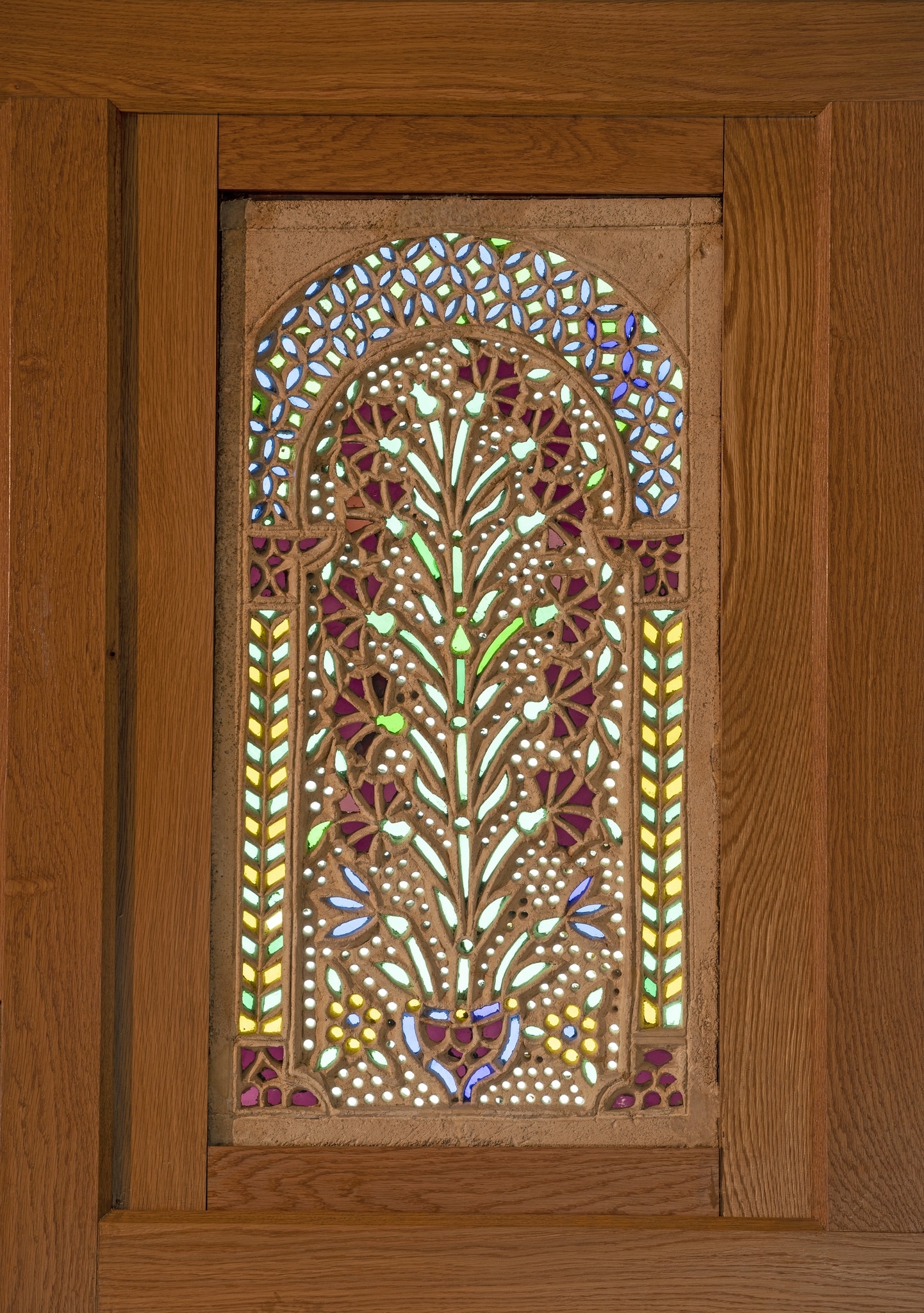
IG_359: Stucco and glass window with flowers in a vase
(GRC_Athens_BenakiMuseumOfIslamicArt_IG_359)

Kontaktdaten

Bitte geben Sie Ihren Vornamen ein.
Bitte geben Sie Ihren Namen ein.
Bitte geben Sie Ihre E-Mail-Adresse ein.
Die E-Mail-Adresse ist ungültig.

Bitte machen Sie so viele Angaben wie möglich (Titel der Publikation, Datenbank, Herausgeber, Auflage, Erscheinungsjahr, usw.)

Das Vitrocentre Romont kann Ihnen nur eigene Bilder zur Verfügung stellen. Bilder von Dritten können wir Ihnen leider nicht überlassen. Betrifft Ihre Bestellung Fotografien von Drittparteien, senden wir Ihnen die Kontaktadresse, über welche die Bilder bezogen werden können.

Die von Ihnen in diesem Formular angegebenen Personendaten werden vom Vitrocentre Romont ausschliesslich für die Bearbeitung Ihrer Bildbestellung verwendet. Die Korrespondenz zur Bestellung wird zur internen Nachvollziehbarkeit archiviert. Die Daten werden weder für andere als die hier aufgelisteten Zwecke verwendet noch an Dritte weitergegeben. Durch das Absenden des Bestellformulars erklären Sie sich mit dieser Nutzung Ihrer Personendaten einverstanden.

Bei Fragen können Sie gerne eine E-Mail an info@vitrosearch.ch senden.

Titel

Stucco glass window with flowers in a vase

Art des Objekts
Masse
69 x 37 cm (without frame); 81.6 x 48.2 x 4.5 cm (with frame)
Künstler:in / Hersteller:in
Herstellungsort
Datierung
early 13th–early 14th centuries AH / 19th century CE
Standort
Inventarnummer
11049
Forschungsprojekt
Autor:in und Datum des Eintrags
Francine Giese, Sophie Wolf 2025

Ikonografie

Beschreibung

A flower stem with twelve red carnations, the top left one without petals, flanked at the foot by two three-petalled flowers. The flowers are in a little vase and arranged symmetrically along a central axis. Two highly stylized, six-petalled flowers flank the vase. The flower bouquet is set within a perforated background, which is slightly recessed. Surrounding the main composition is a canopy-like architecture consisting of columns with twisted shafts in yellow and green that support a finely structured arch in shades of blue and green.

Iconclass Code
25G41 · Blumen
25G41(CARNATION) · Blumen: Nelke
41A6711 · Blumen in einer Vase
48C14 · Architekturdarstellungen (generell)
Iconclass Stichworte

Materialien, Technik und Erhaltungszustand

Materialien

Coarse-grained gypsum plaster; colourless glass; coloured glass (several shades of green and blue, yellow, two shades of purplish red).

Technik

Latticework carved into a rectangular stucco panel and inlaid with colourless and coloured sheet glass. The pieces of glass are fixed on the back of the lattice with a thin layer of gypsum plaster. The average thickness of the stucco panel is approximately 27mm. The stucco panel was cast in a wooden frame.

The design of the latticework has two levels: the main motif (level 0) has been carved out of the stucco panel with a sharp, knife-like tool following a template incised in the surface of the panel. Traces of the incisions are still visible in some places on the front. The second level (level –1), which lies 7–12mm below level 0, shows irregularly spaced, conical perforations. The holes were pierced with a metal or wooden pin in the stucco before it was fully set. They are approximately 7mm in diameter and slightly tapered towards the back. The distance between the holes is 3–5mm. All the holes are backed with colourless glass. The main design has been worked in such a way that the incident light is directed downwards into the room.

The coloured pieces are made of glass that is coloured in the mass, except for the red tones, which are probably made of flashed glass. Elongated parallel bubbles in the glass indicate that the glass sheets were mouth-blown (most probably cylinder-blown).

Erhaltungszustand und Restaurierungen

The window is well preserved. The slightly porous surface of the stucco grille shows signs of weathering. The window was thoroughly restored in 2003. During this intervention, the remains of earlier repairs were largely removed. The restoration measures included cleaning the dirty and weathered surface of the stucco lattice (laser cleaning, density: 1.5 J/cm2 at 1064nm), bonding cracks with acrylic resin, and filling lacunae in the stucco lattice with acrylic filler. The repairs were retouched with pigmented acrylic emulsion. In addition, fragile areas were strengthened with gauze and acrylic resin. The original wooden frame was cleaned with solvent and reinforced by adding an aluminium frame. At the time of restoration, around 95% of the original glass was preserved. Missing pieces were replaced with new ones, which were attached with cellulose nitrate.

Entstehungsgeschichte

Forschung

This stucco and glass window corresponds iconographically and technically to one of the standard types of qamariyya widespread in Egypt during the Ottoman period. Similar windows have survived in several of the collections studied (see for instance IG_7, IG_166, IG_178, IG_255, IG_356).

The representation of flowers in a vase aroused the interest of Western artists and architects, as is attested by a significant number of book illustrations, sketches, and paintings (see for instance IG_43, IG_118, IG_149, IG_153, IG_437, IG_443, IG_461), as well as by the replicas of such windows installed in Arab-style interiors across Europe (IG_54IG_59, IG_64, IG_91, IG_431).

It is a widespread motif in Islamic arts that can be found across numerous media, such as ceramics, wood panelling, wall paintings, textiles, and stucco and glass windows, over a long period of time, in both sacred and profane contexts. Among the most sophisticated examples are the stucco and glass windows from the apartments of the Crown Prince at the Topkapı Sarayı (early 17th century CE, date of the windows uncertain) and the Sultan’s Lodge (Hünkâr Kasrı) of the Yeni Camii (1661–1663 CE, date of the windows uncertain), both in Istanbul.

The Benaki window stands out from most of the examples studied, because the vase does not contain a bouquet composed of different flowers, but one central flower stem with twelve carnations. The detailed and naturalistic rendering of the carnations, especially the depiction of the blossom, also differ from the standard representation of flowers in a vase. The canopy-like structure framing the central composition, also present in IG_355 and IG_357 in the same collection, is not found in any other of the specimen examined. However, the motif here depicted is very common in medieval book illumination, for example.

According to the museum records, the window dates to the 14th or 15th century. However, the stylistic and material characteristics make a later production date more likely. Firstly, the window was in a relatively good state of preservation before restoration in 2003, despite the poor weather resistance of the stucco lattice. If the window had been installed in a building in the 14th or 15th century and been exposed to the weather during more than five centuries, we would have expected it to be more heavily weathered. Secondly, the historicist approach visible in the depiction of a canopy-like structure, and the naturalistic treatment of the carnations, suggests that the window was made in the 19th century. Moreover, the pieces of glass show the characteristics of cylinder-blown sheet glass, a technique that was uncommon in the Islamic world at that time and more commonly used in Europe. Interestingly, the Hungarian architect Max Herz (1856–1819) states in 1902 that sheet glass was imported to Egypt from Europe from the 19th century, because local sheet-glass production had come to a standstill (Herz, 1902, p. 53).

The Cairo-based Cypriot art and antique dealer Phokion Tanos (1898–1972) donated the window – along with twelve other qamariyyāt (11049–11059, 20969, 20960, see IG_336–359) – to the Benaki Museum in Athens, probably in the 1940s.

Datierung
early 13th–early 14th centuries AH / 19th century CE
Zeitraum
1800 – 1899
Frühere Standorte
Herstellungsort

Provenienz

Eigentümer:in
Seit 1940 (ca.): Benaki Museum of Islamic Art, Inventar-Nr.: 11049, Athen (Griechenland), Schenkung
Vorbesitzer:in
Von [Eingangsjahr unbekannt] bis 1940 (ca.): Tanos, Phokion J.

Bibliografie und Quellen

Literatur

Ballian, A. (ed.) (2006): Benaki Museum. A Guide to the Museum of Islamic Art, Athens, Benaki Museum, pp. 136–137.

Herz, M. (1902). Le musée national du Caire. Gazette des Beaux-Arts, 3. Pér. 28, 45–59, 497–505.

Ausstellungen

since 2004: Room III of the premanent exhibition of the Benaki Museum of Islamic Art, Athens

Bildinformationen

Name des Bildes
GRC_Athens_BenakiMuseumOfIslamicArt_IG_359
Fotonachweise
© 2023 by Benaki Museum Athens

Zitiervorschlag

Giese, F., & Wolf, S. (2025). Stucco glass window with flowers in a vase. In Vitrosearch. Aufgerufen am 5. Dezember 2025 von https://vitrosearch.ch/objects/2713203.

Informationen zum Datensatz

Referenznummer
IG_359