Bestelltes Bild

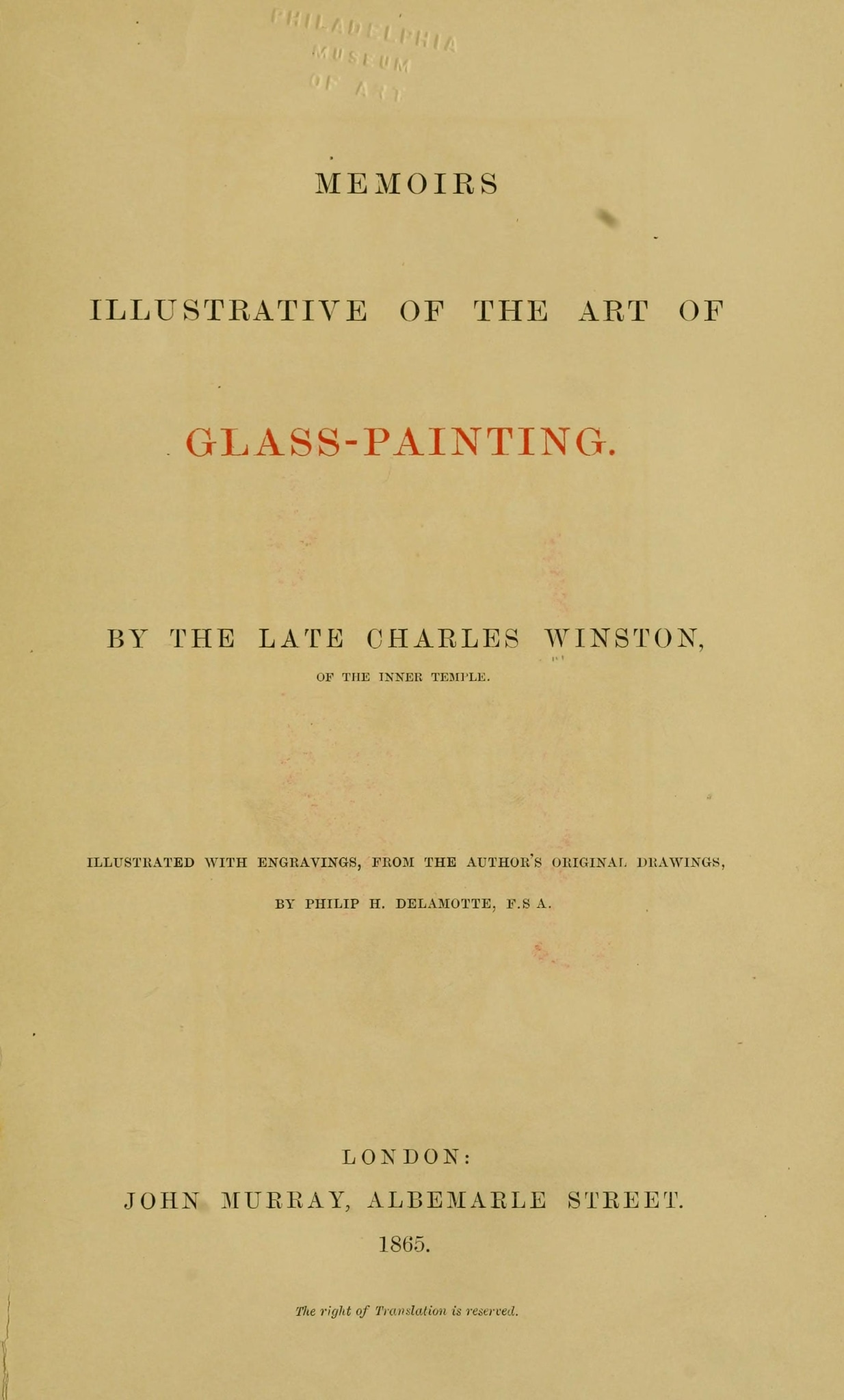
IG_329: Charles Winston, A Lecture on Glass-painting, 1865
(MISC_IG_Winston_1865_IG_329)

Kontaktdaten

Bitte geben Sie Ihren Vornamen ein.
Bitte geben Sie Ihren Namen ein.
Bitte geben Sie Ihre E-Mail-Adresse ein.
Die E-Mail-Adresse ist ungültig.

Bitte machen Sie so viele Angaben wie möglich (Titel der Publikation, Datenbank, Herausgeber, Auflage, Erscheinungsjahr, usw.)

Das Vitrocentre Romont kann Ihnen nur eigene Bilder zur Verfügung stellen. Bilder von Dritten können wir Ihnen leider nicht überlassen. Betrifft Ihre Bestellung Fotografien von Drittparteien, senden wir Ihnen die Kontaktadresse, über welche die Bilder bezogen werden können.

Die von Ihnen in diesem Formular angegebenen Personendaten werden vom Vitrocentre Romont ausschliesslich für die Bearbeitung Ihrer Bildbestellung verwendet. Die Korrespondenz zur Bestellung wird zur internen Nachvollziehbarkeit archiviert. Die Daten werden weder für andere als die hier aufgelisteten Zwecke verwendet noch an Dritte weitergegeben. Durch das Absenden des Bestellformulars erklären Sie sich mit dieser Nutzung Ihrer Personendaten einverstanden.

Bei Fragen können Sie gerne eine E-Mail an info@vitrosearch.ch senden.

Titel

A Lecture on Glass-painting

Art des Objekts
Künstler:in / Hersteller:in
Winston, Charles · Author
Datierung
1865
Forschungsprojekt
Autor:in und Datum des Eintrags
Sarah Keller 2025

Ikonografie

Beschreibung

Charles Winston’s lecture on glass-painting was delivered before the Working Man’s Association at Lichfield in 1859 and later published in Charles Winston, Memoirs Illustrative of the Art of Glass-Painting, London: John Murray 1865, pp. 231–255.

Entstehungsgeschichte

Forschung

The British stained glass historian Charles Winston (1814–1864) introduced the subject of Islamic stucco and glass windows to a British audience interested in stained glass.

He first refers to the Byzantine church of Hagia Sophia in Constantinople and its coloured glazing, described by an ‘ancient writer’ (probably Silentiarius Paulus) and documented in the recent examination ‘by the architect employed by the Prussian government’ (Wilhelm Salzenberg; see Salzenberg, 1854). He also believed that painted glass originated in Constantinople, the ‘cradle of the arts’. However, owing to wartime destruction, nothing has survived except the more recent windows of the mosques. Winston observes that their manufacturing technique goes back to that of the Byzantine windows of the Hagia Sophia and is only slightly modified. He explains that his friend, the architect William Burges, who also had written about Constantinople’s windows (IG_189), had shown him a drawing of one of the windows of the Süleymaniye Mosque, dating to the 10th century AH / 16th CE (IG_91). He compares it with a window brought some years before from Cairo to London by James Spencer Bell (1818–1872), a former MP for Guildford. In 1869, this window entered the collection of the South Kensington Museum (see Thomas, p. 17), but it has not been further identified. Winston subsequently described the technique of the window and the oblique carving, emphasizing the thinness of the glass (Winston, 1865, pp. 236, 237).

Datierung
1865
Zeitraum
1859 – 1865
Herstellungsort

Bibliografie und Quellen

Literatur

Salzenberg, W. (1854). Alt-christliche Baudenkmale von Constantinopel vom V. bis XII. Jahrhundert: Im Anhange des Silentiarius Paulus Beschreibung der Heiligen Sophia und des Ambon. Berlin.

Thomas, A. (2013). James Wild, Cairo and the South Kensington Museum. In: Volait, M. (Ed.), Le Caire dessiné et photographié au XIXe siècle. Paris: Publications de l’Institut national d’histoire de l’art. doi:10.4000/books.inha.4871.

Winston, C. (1865). A Lecture on Glass-painting. In Memoirs Illustrative of the Art of Glass-Painting (pp. 231–255). London: John Murray.

Bildinformationen

Name des Bildes
MISC_IG_Winston_1865_IG_329

Zitiervorschlag

Keller, S. (2025). A Lecture on Glass-painting. In Vitrosearch. Aufgerufen am 5. Dezember 2025 von https://vitrosearch.ch/objects/2713173.

Informationen zum Datensatz

Referenznummer
IG_329