Bestelltes Bild

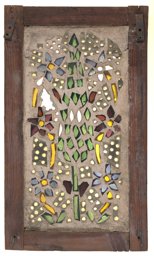
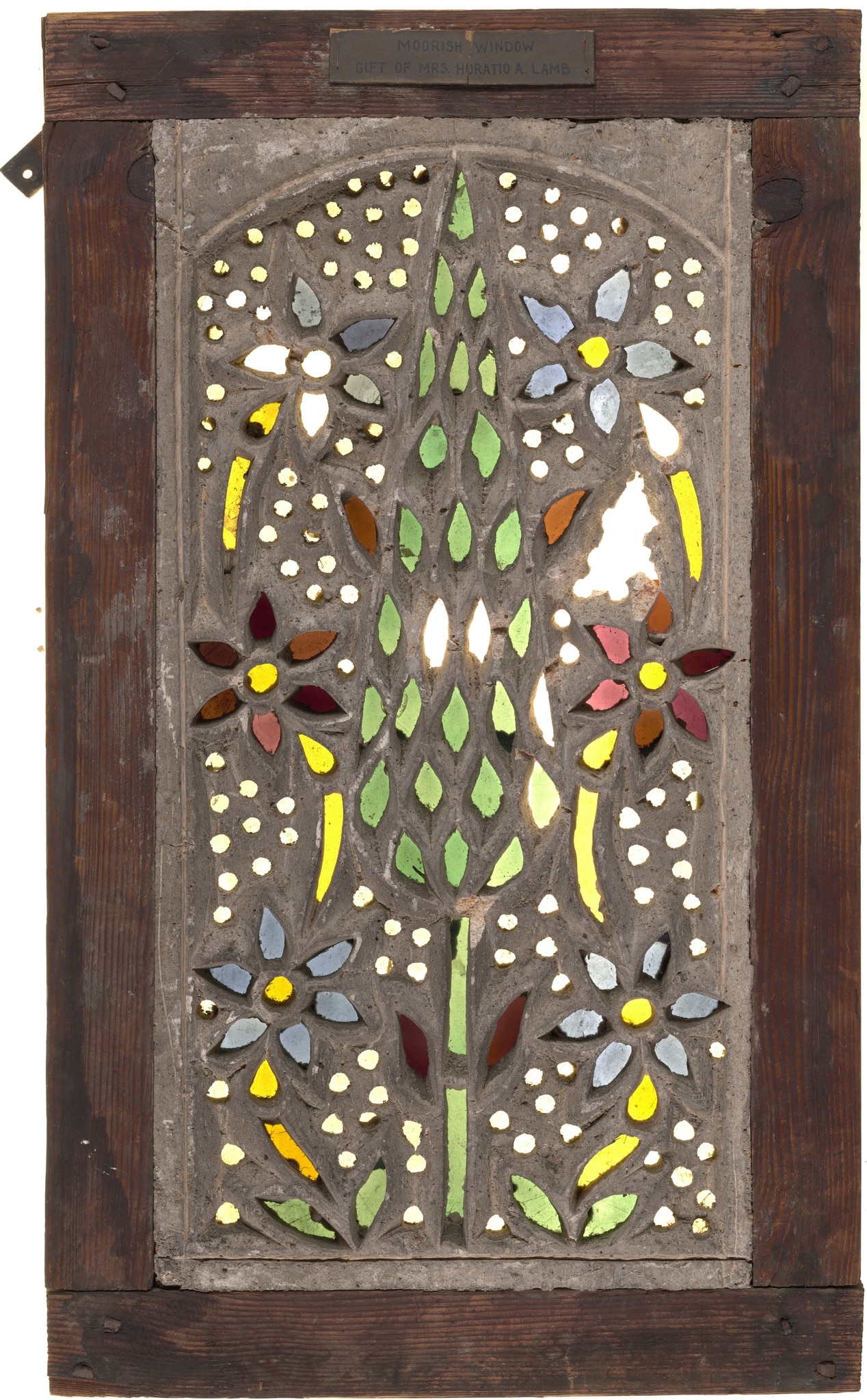
IG_260: Stucco and glass window with cypress tree and flowers, recto
(USA_Cambridge_MITLibraries_IG_260_1)

Kontaktdaten

Bitte geben Sie Ihren Vornamen ein.
Bitte geben Sie Ihren Namen ein.
Bitte geben Sie Ihre E-Mail-Adresse ein.
Die E-Mail-Adresse ist ungültig.

Bitte machen Sie so viele Angaben wie möglich (Titel der Publikation, Datenbank, Herausgeber, Auflage, Erscheinungsjahr, usw.)

Das Vitrocentre Romont kann Ihnen nur eigene Bilder zur Verfügung stellen. Bilder von Dritten können wir Ihnen leider nicht überlassen. Betrifft Ihre Bestellung Fotografien von Drittparteien, senden wir Ihnen die Kontaktadresse, über welche die Bilder bezogen werden können.

Die von Ihnen in diesem Formular angegebenen Personendaten werden vom Vitrocentre Romont ausschliesslich für die Bearbeitung Ihrer Bildbestellung verwendet. Die Korrespondenz zur Bestellung wird zur internen Nachvollziehbarkeit archiviert. Die Daten werden weder für andere als die hier aufgelisteten Zwecke verwendet noch an Dritte weitergegeben. Durch das Absenden des Bestellformulars erklären Sie sich mit dieser Nutzung Ihrer Personendaten einverstanden.

Bei Fragen können Sie gerne eine E-Mail an info@vitrosearch.ch senden.

Titel

Stucco and glass window with cypress tree and flowers

Art des Objekts
Masse
59 x 35 x 2.5 cm (with frame); 50 x 25.5 x 2 cm (without frame)
Künstler:in / Hersteller:in
Herstellungsort
Datierung
Early 12th–early 14th century AH / 18th–19th century CE (?)
Standort
Inventarnummer
Rotch Art Collection 9
Forschungsprojekt
Autor:in und Datum des Eintrags
Francine Giese, Sophie Wolf 2025

Ikonografie

Beschreibung

The design of this stucco and glass window consists of a green cypress tree flanked on either side by a flower stem with five and six-petalled blossoms. The decorated area is surrounded by a segmental arch, which is indicated by a thin incised line. The spandrels above the arch are undecorated. The cypress tree and the flowers are worked out in relief against a perforated background that lies 10mm below the surface.

Iconclass Code
25G3(CYPRESS) · Bäume: Zypresse
25G41 · Blumen
Iconclass Stichworte

Materialien, Technik und Erhaltungszustand

Materialien

Gypsum plaster; colourless glass (with a green tint); coloured glass (green, blue, yellow, purple, several shades of red flashed glass); wood

Technik

The window consists of a latticework carved into a rectangular stucco panel and inlaid with colourless and coloured sheet glass. It was made according to the traditional technique used in the manufacture of qamarīyāt in North Africa up to this day. The rectangular stucco panel is produced by pouring gypsum plaster into a wooden frame. Once the stucco has set, the latticework is carved out using sharp, knife-like tools and following a template incised in the surface of the panel. The openings in the stucco lattice are then covered with the pieces of glass cut according to the design. The pieces of glass are fixed onto the back of the panel by embedding them in a thin layer of gypsum plaster.

The average thickness of the stucco panel is 18mm. The layer of gypsum plaster on the back is 1.5mm thick. The stucco was obviously not completely removed from the glass after embedding, as some of the glass piece have smudged surfaces. There are traces of a shiny, brown, glue-like substance, which suggests that the pieces of glass were stuck onto the latticework with an adhesive before pouring the embedding plaster. The window is preserved in its original wooden frame. The dimensions of the frame are c.48 x 48 x 25mm.

The design of the latticework has two levels. The main motif (level 0) is worked out in relief against the perforated background (level –1), which lies c.10mm below level 0. The incised lines of the preliminary drawing are visible in some places. The irregularly spaced, slightly conical perforations were pierced with a metal or wooden pin in the stucco before it was fully set. They vary between 8 and 10mm in diameter and are slightly tapered towards the back. The distance between the holes is 5–10mm. All the holes are backed with colourless glass. The main design and the perforations have been worked in such a way that the incident light is directed slightly downwards into the room. The oblique cut is more pronounced in the upper half of the window.

The pieces of glass are 1–1.5mm thick. Some pieces show elongated, parallel bubbles, suggesting that the glass sheets were mouth-blown, most likely using the broad-sheet method. Two green pieces of glass have straight edges with a round profile corresponding to the edges of the rectangular glass sheets. The surfaces of the coloured pieces of glass are very smooth and shiny; those of the colourless glass are less even, and some pieces have a wavy surface. Several pieces of glass show scratch marks along the edges, which testify to the use of a glass-cutter.

Erhaltungszustand und Restaurierungen

This stucco and glass window is preserved in its original frame. The front of the stucco lattice is dusty and shows only superficial losses. Only a few pieces of glass are missing. There are no signs of repair.

Entstehungsgeschichte

Forschung

From a technical and iconographic point of view, this stucco and glass window corresponds to one of the standard types of qamariyya widespread in Egypt during the Ottoman period. Similar windows can be found in several of the collections studied (see for instance IG_18, IG_173, IG_355). In contrast to these windows, the cypress tree in this example is flanked by two flower stems rather than entwined with flower tendrils. A comparable design, but with two flanking carnations instead of the flower stems, can be seen in a window of supposedly Egyptian origin that is held today at the Grassi Museum in Leipzig (IG_499).

The cypress trees is a widespread motif in Islamic arts. It can be found in numerous other media, such as ceramics, wood panelling, wall paintings, and textiles, over a long period of time, and in both sacred and profane contexts. Stucco and glass windows representing this motif are illustrated in 19th- and early 20th-century publications (see for instance IG_42, IG_47). The large number of paintings and drawings of stucco and glass windows with this motif demonstrate the great fascination of Western artists and architects for such windows (e.g. IG_118, IG_136, IG_150, IG_153, IG_438, IG_439, IG_468). The growing interest is also evidenced by the existence of several replicas of such windows installed in Arab-style interiors across Europe (IG_50, IG_59, IG_64, IG_427–430).

From a technical and iconographic point of view, it can be assumed that this window was made in an Egyptian workshop during the late Ottoman period. This hypothesis is supported by the results of the analysis of stucco fragments from this window. The stucco lattice is made of a relatively coarse-grained plaster with many inclusions, including charcoal and brick particles. The properties of the plaster suggest artisanal production in smaller workshops like those that still exist in Egypt and the Maghreb today. The assumption of an Egyptian provenance is further confirmed by the results of the chemical analysis of a green piece of glass from this window. The glass shows relatively high concentrations of magnesium and potassium, suggesting that plant ash was used as a fluxing agent. The use of plant in glass production was particularly common in the Islamic world. In Europe, industrial soda ash was the usual flux in the production of sheet glass from the 18th century onwards. Somewhat contradictory, however, is the fact that some of the pieces of glass show the characteristics of cylinder-blown sheet glass (also known as broad-sheet), a technique that was unusual in artisanal glass production in Egypt, but widely used by the European glass industry. It is therefore possible that some of the coloured sheet glass used in this window was produced in a European glass-house. Interestingly, the Hungarian architect Max Herz (1856–1819) states in 1902 that sheet glass was imported to Egypt from Europe from the 19th century, because local sheet glass production had come to a standstill (Herz, 1902, p. 53).

According to the MIT Libraries’ records, this window was acquired by the Boston architect Arthur Rotch (1850–1894) together with three other qamariyyāt (IG_258, IG_259, IG_261) in the 1860s or 1870s. However, since he was still of a young age in the 1860s, we assume that he bought the windows at a later date. All four windows show the incised segmental arch and undecorated spandrels. These similarities support the assumption that they once formed a group of windows probably made in the same workshop. Traces of weathering on the surface of the latticework suggests that the window was exposed to the elements.

Arthur Rotch studied at the Massachusetts Institute of Technology (MIT) from 1872 to 1873, when the American architect William Robert Ware (1832–1915) was head of the newly created Architectural School. Just as other MIT students, Rotch was a trainee at his teacher’s architectural firm, and he continued working at Ware & Van Brunt as a draftsman after completion of his studies in 1874 (Chewning, 1979, p. 26). Interestingly, William Robert Ware also had a collection of stucco and glass windows. He had purchased them in 1890 on the art market in Cairo. In 1893, he donated 17 qamariyyāt to the Metropolitan Museum of Art (see IG_169, IG_171IG_186). Due to the lack of documentation, it can only be assumed that the one knew about the other’s collection. It also remains unclear where Arthur Rotch’s enthusiasm for stucco and glass windows came from. After Rotch’s death, his sister Annie Lawrence Rotch (1850–1926), wife of Horatio Appleton Lamb, donated all four windows to the Department of Architecture at MIT as part of the Rotch Art Collection.

Datierung
Early 12th–early 14th century AH / 18th–19th century CE (?)
Zeitraum
1700 – 1899
Frühere Standorte
Herstellungsort

Provenienz

Eigentümer:in
Seit 1899 (ca.): MIT Libraries, Inventar-Nr.: Rotch Art Collection 9, Cambridge (Vereinigte Staaten)
Schenker:in / Verkäufer:in

?–Arthur Rotch, 1860s–MIT (gifted shortly after the opening of the MIT Architecture School in the 1860s)

Vorbesitzer:in

1860s-1870s (?)– Death Arthur Rotch – Death–E 19th century (?), Horatio A. Lamb, E 19th century–MIT, Department of Architecture

Von 1894 bis 1899 (ca.): Rotch, Annie Lawrence
Von [Eingangsjahr unbekannt] bis 1894: Rotch, Arthur

Bibliografie und Quellen

Literatur

Chewning, J. A. (1979). William Robert Ware at MIT and Columbia. Journal of Architectural Education, 33(2), pp. 25–29.

Herz, M. (1902). Le musée national du Caire. Gazette des Beaux-Arts, 3. Pér. 28, 45–59, 497–505.

Bildinformationen

Name des Bildes
USA_Cambridge_MITLibraries_IG_260_1
Fotonachweise
Rotch Art Collection, Department of Distinctive Collections, MIT Libraries

Weiteres Bildmaterial und verwandte Objekte

Zusätzliches Bildmaterial
Stucco and glass window with cypress tree and flowers, verso

Zitiervorschlag

Giese, F., & Wolf, S. (2025). Stucco and glass window with cypress tree and flowers. In Vitrosearch. Aufgerufen am 5. Dezember 2025 von https://vitrosearch.ch/objects/2713104.

Informationen zum Datensatz

Referenznummer
IG_260