Image Ordered

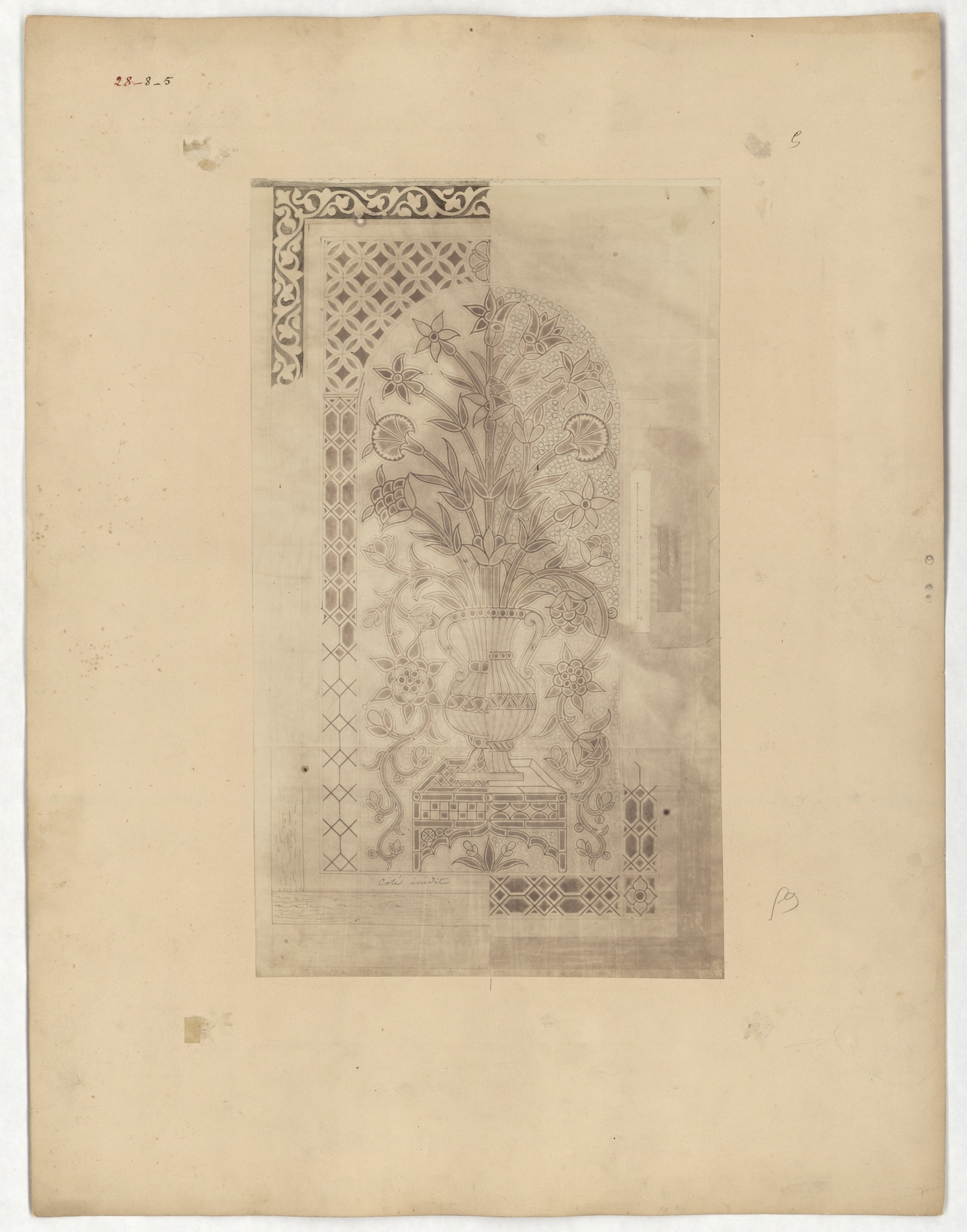
IG_488: Montage of stucco and glass windows with flowers in a vase
(FRA_Paris_BnF_IG_488)

Contact Details

Please specify your first name.
Please specify your name.
Please specify your e-mail address.
The e-mail address is invalid.

Please provide as much information as possible (publication title, database, publisher, edition, year of publication, etc.).

The Vitrocentre Romont can only provide you with its own photographs. We regret that we cannot supply images from third parties to you. If your order concerns photographs from third parties, we will send you the contact address from which the images can be obtained.

The personal data you provide in this form will be used by Vitrocentre Romont exclusively for the processing of your image order. Correspondence regarding the order will be archived for internal reference. The data will not be used for purposes other than those listed here, nor will it be passed on to third parties. By sending the order form, you agree to this use of your personal data.

Should you have any questions, please send us an e-mail: info@vitrosearch.ch.

Title

Montage of stucco and glass windows with flowers in a vase

Type of Object
Dimensions
42.5 x 25 cm (proof); 63.5 x 49 cm (support)
Artist / Producer
Dating
c. 1867
Location
Inventory Number
NAF 20443 (2), 28-8-5, fol. 5
Research Project
Author and Date of Entry
Sarah Tabbal 2024; Sarah Keller 2025

Iconography

Description

This montage, made by Émile Prisse d’Avennes (1807–1879), combines two stucco and glass windows, both with the motif of stylized flowers (roses, carnations, lillies and tulips) in a vase, placed on a table. Prisse indicated the holes drilled in the stucco panel with many small dots. On the left side, the vase of flowers is seen within an arch made of geometric forms. The windows are encased in a frame; the one on the left side features a stylized tendril ornament, of which Prisse d’Avennes only drew the upper part.

Iconclass Code
25G41(CARNATION) · flowers: carnation
25G41(LILY) · flowers: lily
25G41(ROSE) · flowers: rose
25G41(TULIP) · flowers: tulip
41A6711 · flowers in a vase
Iconclass Keywords
Inscription

Coté inédit

Materials, Technique and State of Preservation

Technique

Retouched photograph mounted on bristol board: salt print after a collodion glass negative. Proof entirely coloured with black watercolour.

History

Research

In the archives of Émile Prisse d’Avennes (1807–1879) two mounted and retouched photographs (fol. 3 and 5, IG_467, IG_488) are preserved in the album Art Arabe. Dessins: Arabesques, 5. They are preparatory works for the French archaeologist’s book L’Art arabe d’après les monuments du Kaire depuis le VIIe siècle jusqu’à la fin du XVIIIe, published in 1877.
The windows on fol. 5 were reconstructed from fragments. Prisse d’Avennes explains that he had been able to buy in Paris three boxes with fragments of six stucco and glass windows from a mosque in Egypt. In 1867, these windows had been sent from Egypt to the world’s fair in Paris, but had not survived the journey and therefore arrived there in pieces. Prisse d’Avennes succeeded in reconstructing two windows (Prisse d’Avennes, 1869–1877, vol. 1, pp. 154, 278, vol. 3, pl. CXLV; Keller, 2020, p. 31). A photograph of these fragments can be found in one of Prisse d’Avennes’ Cairo’s portfolios (IG_86).
Only one of the reconstructed windows on fol. 5 – the right side of the montage shown here – was published in the book (IG_43). As indicated by an annotation – 'coté inédit' –, the left side remained unpublished, because they were too similar to each other (Prisse d’Avennes, 1869–77, vol. 1, p. 278).
Prisse d'Avennes repeatedly used photographs to create his lithographs. For the expedition to Egypt in 1858–1860, he had recruited Willem de Famars Testas (1834–1896) as draughtsman and Édouard Jarrot (1835–1873) as photographer. Some of the photographs made on the journey had later been retouched, mostly to emphasise the contours, which simplified the work of the lithographer. This work was one of the tasks of de Famars Testas (de Hond, 2013, p. 85–86). The two retouched photographs of stucco and glass windows, however, were not made in Egypt but in Paris.

Dating
c. 1867
Period
1867 – 1877
Related Locations
Place of Manufacture

Provenance

Owner
Bibliothèque Nationale de France, Inventory Number: NAF 20443 (2), 28-8-5, fol. 5, Paris (France)

Bibliography and Sources

Literature

De Hond, J. (2013). 'Ceci aura néanmoins probablement son utilité': Willem de Famars Testas au Caire, 1858-1860. In: M. Volait (ed.), Le Caire dessiné et photographié au XIXe siècle (pp. 69–94). Paris: Picard.

Keller, S. (2020). 'De véritables merveilles d’exécution': Les vitraux du fumoir arabe d’Henri Moser. In F. Giese, M. Volait, & A. Varela Braga (Eds.), À l’orientale: Collecting, Displaying and Appropriating Islamic Art and Architecture in the Nineteenth and Early Twentieth Centuries. Arts and Archaeology of the Islamic World, 14 (pp. 28–38). Leiden/Boston: Brill.

Prisse d’Avennes, É. (1869–1877). L’art arabe d’après les monuments du Kaire depuis le VIIe siècle jusqu’à la fin du XVIIIe. 4 Vols. J. Savoy & Cie.

Image Information

Name of Image
FRA_Paris_BnF_IG_488
Credits
Source gallica.bnf.fr / BnF

Citation suggestion

Tabbal, S., & Keller, S. (updated) (2025). Montage of stucco and glass windows with flowers in a vase. In Vitrosearch. Retrieved December 5, 2025 from https://vitrosearch.ch/objects/2713332.

Record Information

Reference Number
IG_488