Description
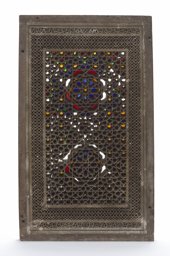
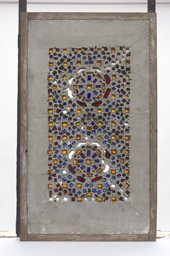
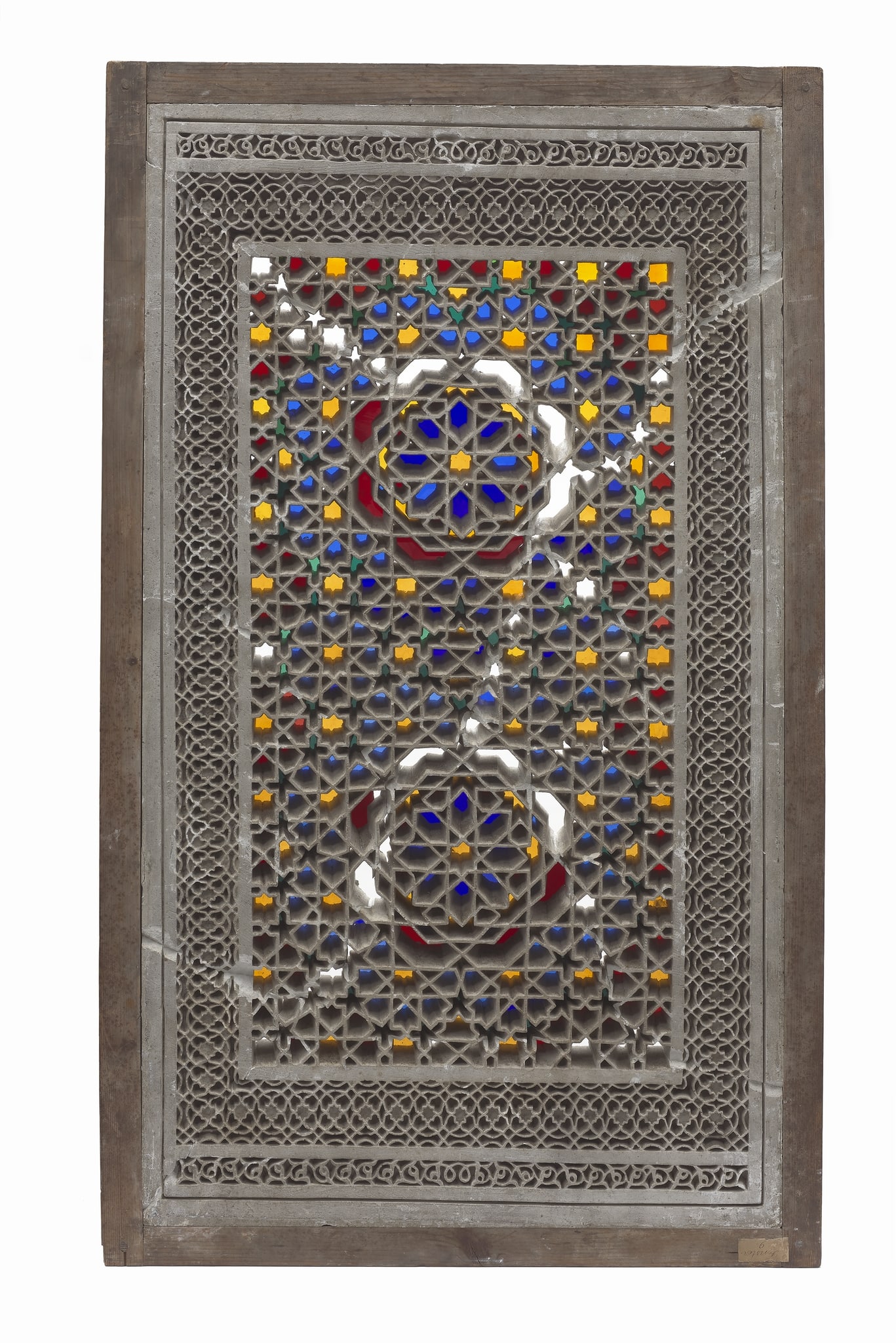
Rectangular stucco and glass window with geometric ornamentation composed of eight-pointed stars. The stars are symmetrically arranged and form a continuous, interlaced grid. The main field is surrounded by a broad frame with interlaced ribbon ornament. In addition, there are two narrow bands with floral decoration at the top and bottom of this frame. The area framing the star pattern is not perforated and therefore not backed with coloured glass.
The stucco panel is held in a wooden frame composed of four slats held together by nails at the corners.
Iconclass Code
48A981 · ornament ~ geometric motifs
48A9815 · ornament ~ starforms
48A983 · ornament derived from plant forms
48A9878 · interlace ~ ornament
48A9815 · ornament ~ starforms
48A983 · ornament derived from plant forms
48A9878 · interlace ~ ornament
Iconclass Keywords
Inscription
Paper label bottom right (written upside down): Fenster 9