Image Ordered

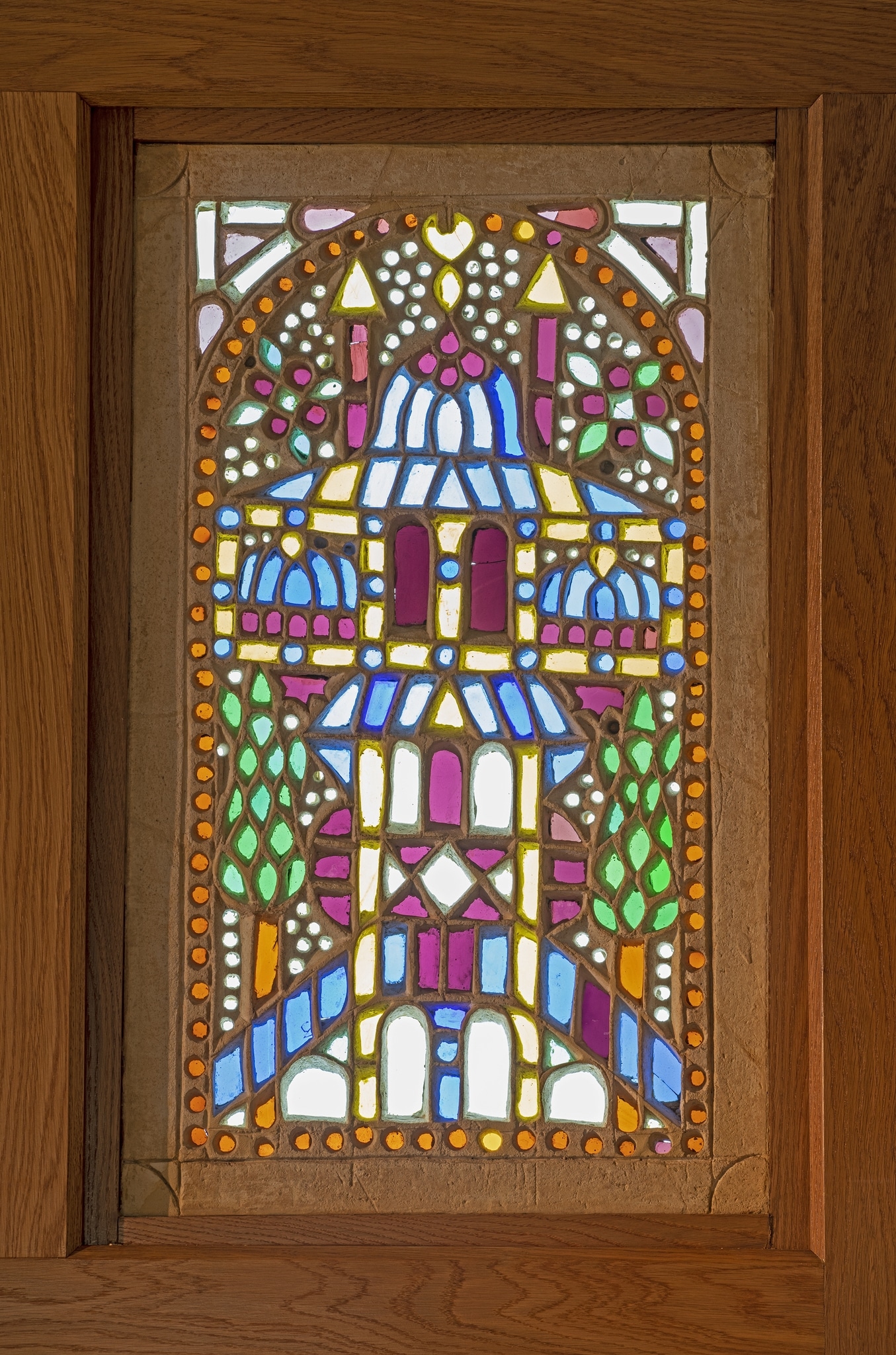
IG_354: Stucco and glass window with architectural representation
(GRC_Athens_BenakiMuseumOfIslamicArt_IG_354)

Contact Details

Please specify your first name.
Please specify your name.
Please specify your e-mail address.
The e-mail address is invalid.

Please provide as much information as possible (publication title, database, publisher, edition, year of publication, etc.).

The Vitrocentre Romont can only provide you with its own photographs. We regret that we cannot supply images from third parties to you. If your order concerns photographs from third parties, we will send you the contact address from which the images can be obtained.

The personal data you provide in this form will be used by Vitrocentre Romont exclusively for the processing of your image order. Correspondence regarding the order will be archived for internal reference. The data will not be used for purposes other than those listed here, nor will it be passed on to third parties. By sending the order form, you agree to this use of your personal data.

Should you have any questions, please send us an e-mail: info@vitrosearch.ch.

Title

Stucco glass window with representation of a mosque

Type of Object
Dimensions
76.2 x 46 cm (without frame); 86 x 56 x 5 cm (with frame)
Artist / Producer
Place of Manufacture
Dating
early 13th–early 14th centuries AH / 19th century CE
Location
Inventory Number
11054
Research Project
Author and Date of Entry
Francine Giese, Sophie Wolf 2025

Iconography

Description

Rectangular stucco and glass window with a representation of an Ottoman mosque. The building is depicted in a reduced way, highlighting the shrine’s main features, i.e., the courtyard, the prayer hall with a central dome crowned by a jamur ending in a crescent moon, and two thin minarets with pointed roofs. Two smaller domes are placed on either side of the main one. As is usual in comparable representations in other media, such as ceramics, the mosque is depicted by combining a front view (prayer hall) and a bird’s eye view (courtyard). Two cypress trees and two blossoming flowers flank the mosque. The whole motif is worked out in relief against a perforated background that lies 6–8mm below the surface of the stucco panel. It is surrounded by a dotted, semicircular frame. The spandrels above the arch show a geometric ornamentation.

Iconclass Code
12I61 · temple, shrine ~ Islam, Mohammedanism
25G3(CYPRESS) · trees: cypress
48C14 · architectural representations in general
Iconclass Keywords

Materials, Technique and State of Preservation

Materials

Coarse-grained gypsum plaster; colourless glass with a greenish tint; coloured glass (four shades of green, three shades of blue, three shades of yellow (including an orange colour), three shades of purple)

Technique

Latticework carved into a rectangular stucco panel and inlaid with colourless and coloured sheet glass. The pieces of glass are fixed on the back of the lattice with a thin layer of gypsum plaster. The average thickness of the stucco panel is 22–25mm. The stucco panel was cast in a wooden frame, which was reinforced by nailing a strip of wood to the top right corner of the rear side.

The design of the latticework has two levels: the main motif (level 0) has been carved out of the stucco panel with sharp, knife-like tools following a template incised in the surface of the panel. Traces of the incisions are still visible in some places on the front. The second level (level –1), which lies 6–8mm below level 0, shows irregularly spaced, conical perforations. The holes were pierced with a metal or wooden pin in the stucco before it was fully set. They are approximately 10mm in diameter and slightly tapered towards the back. The distance between the holes is 2–5mm. All holes are backed with colourless glass. The main design and the perforations have been worked in such a way that the incident light is directed downwards into the room.

The glass is either colourless or coloured in the mass. Elongated parallel bubbles indicate that the glass sheets were mouth-blown, possibly using the broad-sheet method.

State of Preservations and Restorations

The window was thoroughly restored in 2003 and is well preserved, but the latticework still shows signs of weathering. During this restoration, earlier repairs were largely removed. Among other things, the 2–3mm thick coat of paint on the front of the stucco grille was removed with a scalpel. The restoration measures included cleaning the surface of the stucco lattice (laser cleaning, density: 1.5 J/cm2 at 106 nm), bonding cracks with acrylic resin, and filling lacunae in the stucco lattice with acrylic filler. The repairs were retouched with pigmented acrylic emulsion. In addition, fragile areas were strengthened with gauze and acrylic resin. The original wooden frame was cleaned with solvent and reinforced by adding an aluminium frame.

At the time of restoration, around 90% of the original pieces of glass were preserved. Missing pieces were replaced with new ones, which were attached with cellulose nitrate.

History

Research

From an iconographic point of view, the stucco and glass window corresponds to one of the standard types of qamariyya widespread in Egypt during the Ottoman period. A similar window was documented by the British architect James William Wild (1814–1892) during his stay in Cairo in the years 1844–1847 in the mandarah of Beyt Sheikh al-ʿAbbasi al-Mahdi (IG_446). This motif is far less commonly represented in the collections we examined than other motifs. Two of the few examples of this type are preserved at The Metropolitan Museum of Art in New York (IG_184, IG_185).

Representations of mosques can also be found in other media. Most noteworthy are architectural ceramics of the Ottoman period (see for instance, Musée du Louvre, OA 3919/556, OA 3919/558, OA 3919/559; Metropolitan Museum of Art, 2012.337; Victoria and Albert Museum, 427-1900). While in these examples specific shrines such as the Kaaba in Mecca are depicted, the mosques shown in stucco and glass windows are often reduced to their main features. The courtyard, dome(s), and minarets are depicted in a schematic way and most likely do not represent any existing mosque.

From a technical point of view, it can be assumed that the window was made in an Egyptian workshop. Although the rear of the window was not accessible during our examination, it can be concluded from the restoration report of 2004 that the window was made according to the traditional technique used in the manufacture of qamariyyāt in North Africa to this day (see Technique).

According to the museum records, the window dates to the 16th or 17th century. However, there are some indications that speak against this early date. On the one hand, the abstract design of the spandrels, reminiscent of 18th–19th-century windows from Istanbul, suggests a later dating. On the other hand, the window was in a relatively good state of preservation before the restoration in 2003, despite the poor weather resistance of the stucco lattice. If the window had been installed in a building in the 16th or 17th century and been exposed to the weather for two or three centuries, we would have expected it to be more heavily weathered before its restoration in 2003. Moreover, the pieces of glass show the characteristics of cylinder-blown sheet glass, a technique that was uncommon in the Islamic world at that time and more commonly used in Europe. Interestingly, the Hungarian architect Max Herz (1856–1819) states in 1902 that sheet glass was imported to Egypt from Europe from the 19th century, because local sheet-glass production had come to a standstill (Herz, 1902, p. 53).

The Cairo-based, Cypriot art and antique dealer Phokion Tanos (1898–1972) donated this window – along with 12 other qamariyyāt (11049–11059, 20969, 20960, see IG_336–359) – to the Benaki Museum in Athens, probably in the 1940s.

Dating
early 13th–early 14th centuries AH / 19th century CE
Period
1800 – 1899
Previous Locations
Place of Manufacture

Provenance

Owner
Since 1940 (ca.): Benaki Museum of Islamic Art, Inventory Number: 11054, Athens (Greece), Donation
Previous Owner
From [year of reception unknown] until 1940 (ca.): Tanos, Phokion J.

Bibliography and Sources

Literature

Ballian, Anna (ed.) (2006): Benaki Museum. A Guide to the Museum of Islamic Art, Athens, Benaki Museum, pp. 136–137.

Herz, M. (1902). Le musée national du Caire. Gazette des Beaux-Arts, 3. Pér. 28, 45–59, 497–505.

Exhibitions

since 2004: Room III of the premanent exhibition of the Benaki Museum of Islamic Art, Athens

Image Information

Name of Image
GRC_Athens_BenakiMuseumOfIslamicArt_IG_354
Credits
© 2023 by Benaki Museum Athens

Citation suggestion

Giese, F., & Wolf, S. (2025). Stucco glass window with representation of a mosque. In Vitrosearch. Retrieved December 5, 2025 from https://vitrosearch.ch/objects/2713198.

Record Information

Reference Number
IG_354