
Image Ordered

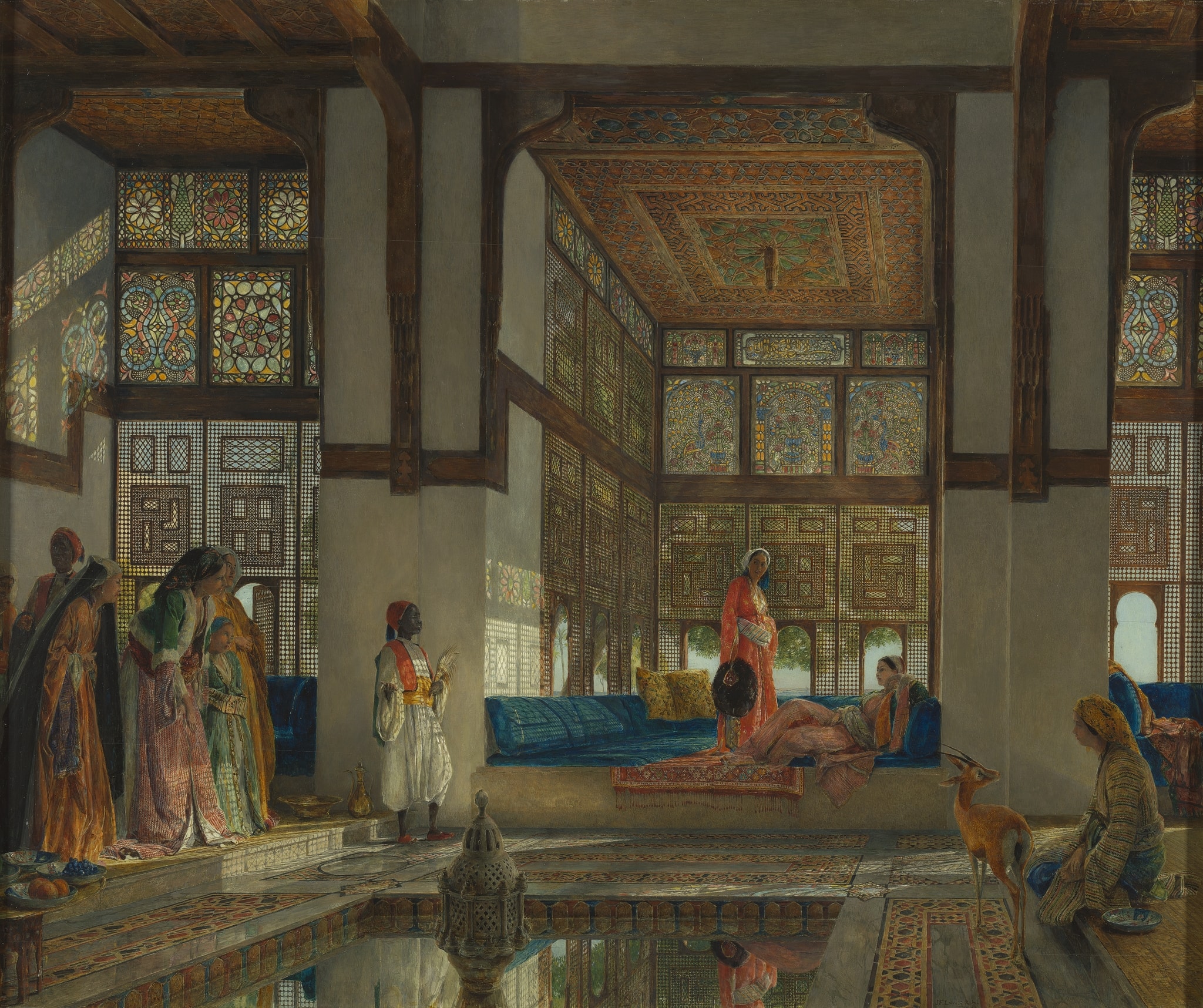
IG_118: A Lady Receiving Visitors (The Reception)
(USA_NewHaven_YaleCenterForBritishArt_IG_118)

Contact Details

Please specify your first name.
Please specify your name.
Please specify your e-mail address.
The e-mail address is invalid.

Please provide as much information as possible (publication title, database, publisher, edition, year of publication, etc.).

The Vitrocentre Romont can only provide you with its own photographs. We regret that we cannot supply images from third parties to you. If your order concerns photographs from third parties, we will send you the contact address from which the images can be obtained.

The personal data you provide in this form will be used by Vitrocentre Romont exclusively for the processing of your image order. Correspondence regarding the order will be archived for internal reference. The data will not be used for purposes other than those listed here, nor will it be passed on to third parties. By sending the order form, you agree to this use of your personal data.

Should you have any questions, please send us an e-mail: info@vitrosearch.ch.

Title

A Lady Receiving Visitors (The Reception)

Type of Object
Dimensions
63.5 x 76.2 cm
Artist / Producer
Dating
1873
Location
Inventory Number
B1981.25.417
Research Project
Author and Date of Entry
Sarah Tabbal 2024

Iconography

Description

The Victorian painter John Frederick Lewis (1804–1876) depicted stucco and glass windows in his oil painting A Lady Receiving Visitors(The Reception), which was completed in 1873 and visualizes the mandarah (room where guests are received) of a domestic interior with several women, children, and a gazelle.
Lewis recorded the architectural elements of the Egyptian interior in detail, with a square water-filled basin surrounded by three bays. The luminous space is lent character by the wooden lattices in the lower half of the bays and the coloured stucco and glass windows above. Bright daylight floods the interior, streaming in through the lattices and the multi-coloured stucco and glass windows, partially reflected on the different surfaces of the interior, and creating a play of light, shadow, and colour (Weeks, 2014, pp. 111–127). The window in the central bay with the motif of a vase of flowers is flanked by two windows that mirror each other with the motif of a stylized peacock standing next to a smaller vase of flowers. Above these three figurative windows is another narrow upper row of rectangular windows: the one in the centre bears a cartouche with a Quranic inscription in yellow, and the two on either side show motifs of vases of flowers and palm trees. The coloured stucco and glass windows in the recesses to the left and right of the central bay mirror one another and show various geometric motifs (in the lower row), and again stylized cypresses and geometric ornament (in the upper row). The complementary colours of blue and orange, as well as the red and green of the windows, are echoed in the painted wood, the marble intarsia, the textiles, and the garments of the women (Weeks, 2014, p. 110).

Iconclass Code
25F35(PEACOCK) · ornamental birds: peacock
25G3(CYPRESS) · trees: cypress
41A2 · interior of the house
41A33 · window
41A6711 · flowers in a vase
48C1412 · interior ~ representation of a building
Iconclass Keywords

Materials, Technique and State of Preservation

Technique

Oil on panel.

History

Research

The Cairene house in which Lewis lived during his near ten-year sojourn in Egypt between 1841 and 1851 may have inspired the interior shown in his work A Lady Receiving Visitors, painted after his return to England in 1873 (Llewellyn, 1998, pp. 149–151, and Weeks, 2014, pp. 15 and 40–42). Lewis also dealt with the interior in his watercolour Mendurah in my House in Cairo (IG_119), painted around 1843 in Egypt, which may have served as a reference in the creation of this painting (Tromans, 2008, p. 133, and Llewellyn, 1998, p. 153). The British architect James William Wild (1814–1892) (IG_449) also depicted a section of the interior of this house in a watercolour, as is confirmed by a pencil note that the interior represents the Cairene house in which Lewis lived by himself during his sojourn in Egypt (Weeks, 2014, pp. 40–43).
Lewis made a version of this oil painting in watercolour entitled Introduction to the Harem, which is today held in a private collection (Weeks, 2013, Fig. 2). Emily Weeks notes that there are subtle differences between the two works (Weeks, 2013), but the motifs and arrangement of the windows in the oil painting and the watercolour correspond. Stucco and glass windows can also be seen in other paintings by Lewis: they can be seen, for example, partially covered, on both sides of a pillar in the background of the picture And the Prayer of Faith Shall Save the Sick (1872, oil on panel, 90.8 × 70.8cm, Yale Center for British Art, Paul Mellon Collection, B1975.1.16).

Dating
1873
Related Locations

Bibliography and Sources

Literature

Llewellyn, B. (1998). Two Interpretations of Islamic Domestic Interiors in Cairo: J. F. Lewis and Frank Dillon. In Travellers in Egypt, ed. Paul Starkey and Janet Starkey. London and New York: Tauris, 148–56.

Tromans, N. (ed.) (2008). The Lure of the East: British Orientalist Painting. London: Tate Publishing.

Weeks, E. M. (2013). Oil and Water: (Re)Discovering John Frederick Lewis (1804–76). In Nineteenth-Century Art Worldwide 12, no. 2, http://www.19thc-artworldwide.org/autumn13/new-discoveries-re-discovering-john-frederick-lewis-1804-76 (accessed August 27, 2020).

Weeks, E. M. (2014). Cultures Crossed: John Frederick Lewis and the Art of Orientalism. London: Yale University Press.

Image Information

Name of Image
USA_NewHaven_YaleCenterForBritishArt_IG_118
Credits
Yale Center for British Art, Paul Mellon Collection
Copyright
Public Domain

Citation suggestion

Tabbal, S. (2024). A Lady Receiving Visitors (The Reception). In Vitrosearch. Retrieved December 5, 2025 from https://vitrosearch.ch/objects/2712962.

Record Information

Reference Number
IG_118