
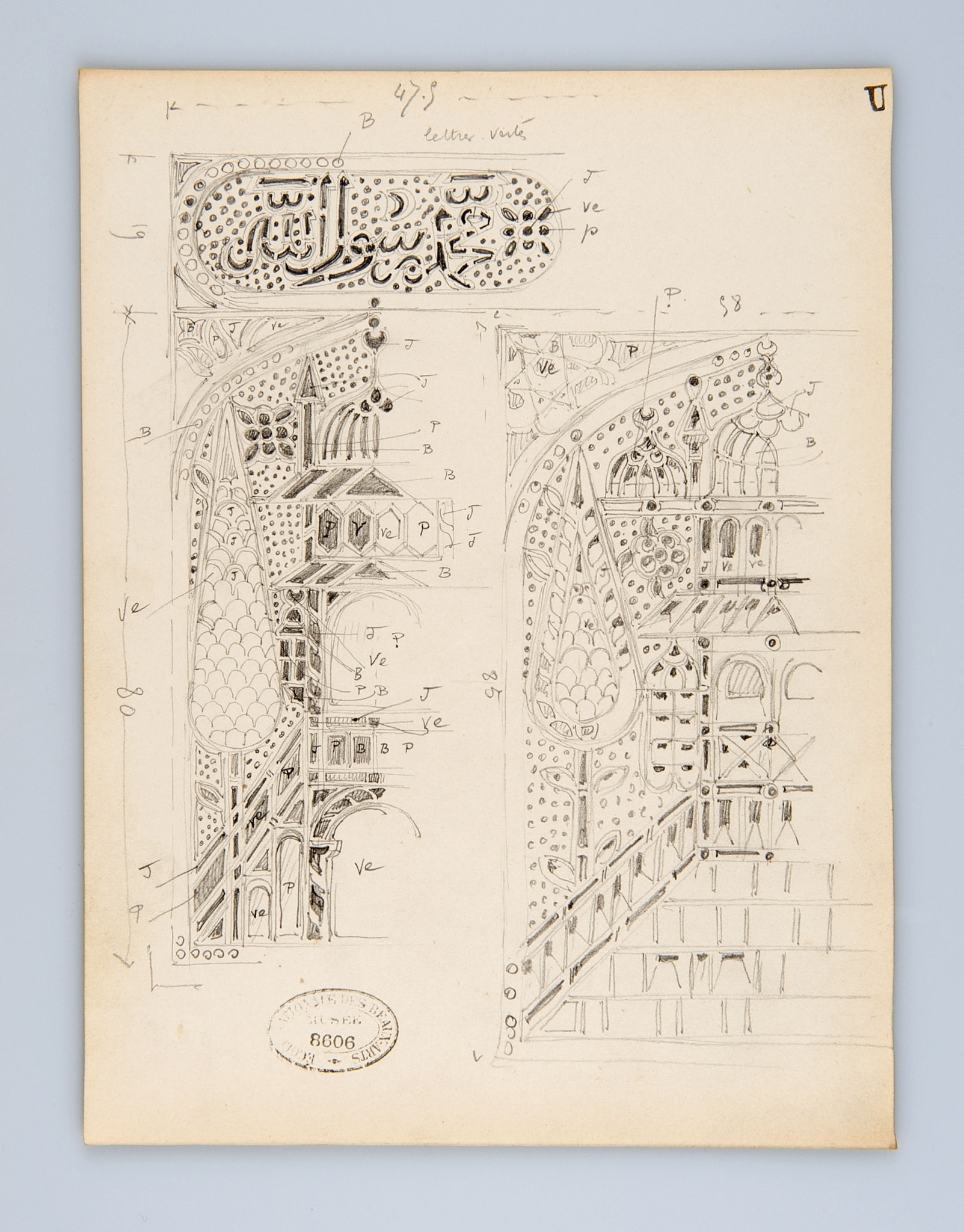
This fine and detailed pencil drawing by the French architect Jules Bourgoin (1838–1908) shows two rectangular stucco and glass windows with stylized architecture in a landscape setting. The windows feature stylized mosque architecture with elements of domes and minarets, flanked by a cypress tree on each side. Bourgoin concentrated on the left halves of these symmetrical windows, executing only the left side of the stylized architecture and one cypress tree. He also depicted the Islamic inscription, its calligraphy in naskh script in a cartouche, in the upper part of the left window in its entirety. The inscription is the second statement of the shahādah.
Although the two windows bear the same motif, they differ slightly from each other in details. Furthermore, the stucco and glass window on the right side has no cartouche with inscription. In both windows however, as well as in the cartouche, Bourgoin indicated the perforations in the stucco with many small dots. He also hatched some pieces of glass in pencil, giving the impression of depth, but left the drawing uncoloured. The colour of the windows nevertheless plays an important role here: Bourgoin added pencil notes (capital letters abbreviating the names of colours) to some of the pieces of glass in the window. He also drew a scale and gave detailed information about the sizes of the different parts of the windows. This approach – depicting stucco and glass windows in great detail with supplementary information regarding size and colour – is evidence of Bourgoin’s interest in the details of Islamic material culture and architecture.
25G3(CYPRESS) · Bäume: Zypresse
48C14 · Architekturdarstellungen (generell)
49L142 · arabische Schrift
49L8 · Inschrift, Aufschrift
Muḥammadun rasūlu ʾllāh (Muhammad is the messenger of God)