Bestelltes Bild

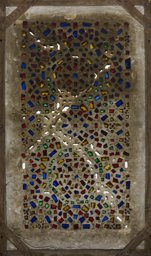
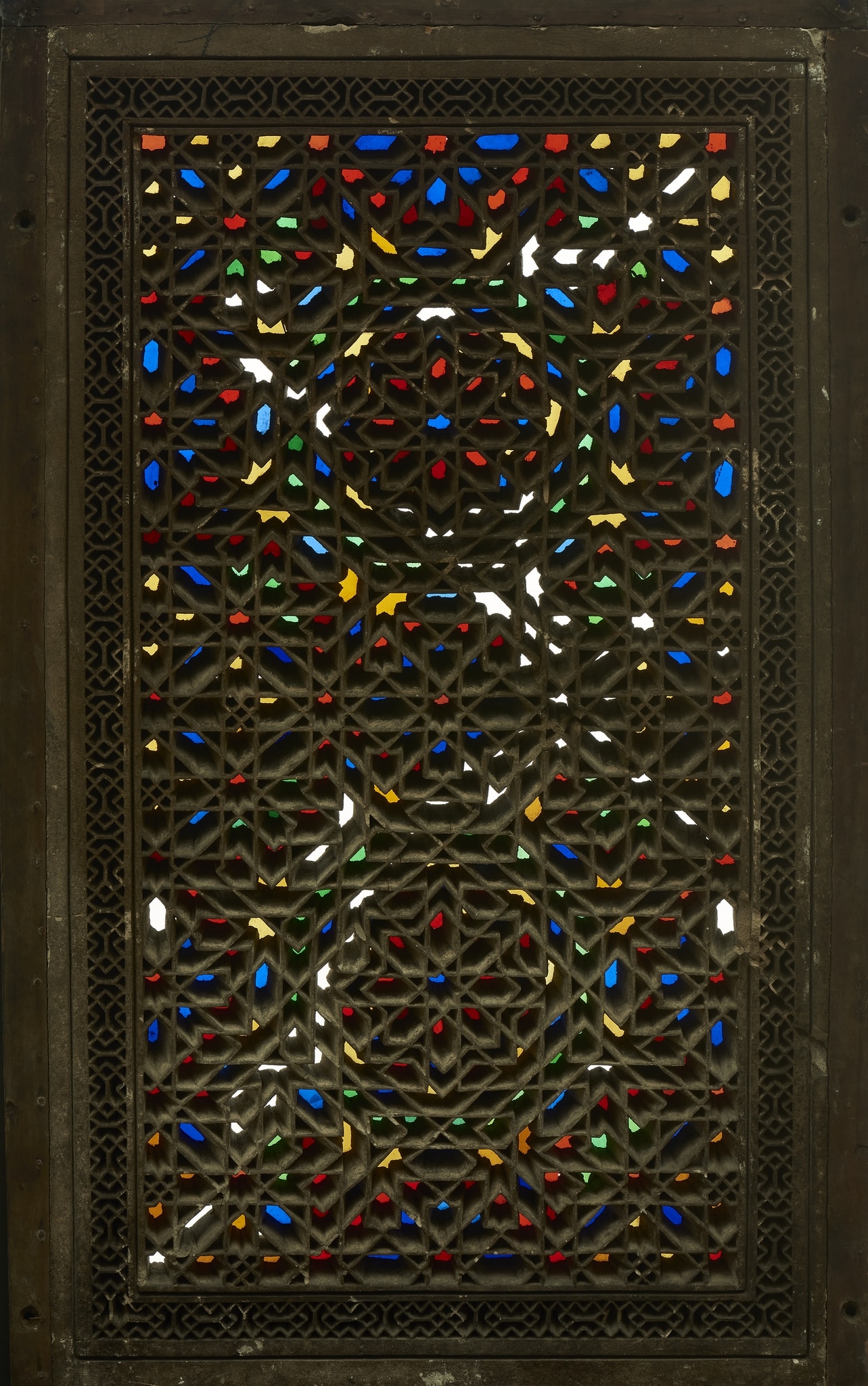
IG_362: Stucco and glass window with interlaced star ornamentation
(AUT_Wien_MAK_IG_362_1)

Kontaktdaten

Bitte geben Sie Ihren Vornamen ein.
Bitte geben Sie Ihren Namen ein.
Bitte geben Sie Ihre E-Mail-Adresse ein.
Die E-Mail-Adresse ist ungültig.

Bitte machen Sie so viele Angaben wie möglich (Titel der Publikation, Datenbank, Herausgeber, Auflage, Erscheinungsjahr, usw.)

Das Vitrocentre Romont kann Ihnen nur eigene Bilder zur Verfügung stellen. Bilder von Dritten können wir Ihnen leider nicht überlassen. Betrifft Ihre Bestellung Fotografien von Drittparteien, senden wir Ihnen die Kontaktadresse, über welche die Bilder bezogen werden können.

Die von Ihnen in diesem Formular angegebenen Personendaten werden vom Vitrocentre Romont ausschliesslich für die Bearbeitung Ihrer Bildbestellung verwendet. Die Korrespondenz zur Bestellung wird zur internen Nachvollziehbarkeit archiviert. Die Daten werden weder für andere als die hier aufgelisteten Zwecke verwendet noch an Dritte weitergegeben. Durch das Absenden des Bestellformulars erklären Sie sich mit dieser Nutzung Ihrer Personendaten einverstanden.

Bei Fragen können Sie gerne eine E-Mail an info@vitrosearch.ch senden.

Titel

Stucco and glass window with interlaced star ornamentation

Art des Objekts
Masse
112.5 x 67.8 x 4 cm (with frame, approximate thickness of the window); 105.8 x 60.8 x 4 cm (without frame, approximate thickness of the window)
Künstler:in / Hersteller:in
Herstellungsort
Datierung
early 13th–early 14th centuries AH / 19th century CE
Standort
Inventarnummer
OR 3608
Forschungsprojekt
Autor:in und Datum des Eintrags
Francine Giese, Sophie Wolf 2025

Ikonografie

Beschreibung

Rectangular stucco and glass window with geometric ornamentation composed of interlaced eight-pointed stars. The stars are arranged symmetrically along the centre axis and form a pattern of interlocking stars. The rectangular field is framed by an interlaced ribbon ornament, which, unlike the main field, is not perforated and therefore not backed with coloured glass.

The window is preserved in its original wooden frame. On its back, the frame is reinforced by wooden struts running diagonally across all four corners; the struts are fixed with nails. The front of the latticework is dark brown. The back of the window is spotty.

Iconclass Code
48A981 · Ornament aus geometrischen Motiven
48A9815 · sternförmiges Ornament
48A9878 · Flechtwerk (Ornament)
Iconclass Stichworte

Materialien, Technik und Erhaltungszustand

Materialien

Gypsum plaster; coloured glass (two shades of green, two shades of blue, orange, yellow, and two shades of red flashed glass); wood; metal; paint (?)

Technik

The latticework was carved into a rectangular stucco panel and inlaid with colourless and coloured pieces of glass.

The stucco panel was made by pouring plaster into a wooden frame, which consists of four wooden slats joined at the corners and fixed with nails. Four diagonal wooden struts in the corners of the frame reinforce the structure. The panel is c.40mm thick. The pieces of glass were fixed onto the back of the lattice by embedding them in a thin layer of gypsum plaster. The thickness of this layer ranges between 2.5 and 4mm.

The design of the latticework was carved out of the stucco panel with sharp, knife-like tools following a template incised in the surface of the panel. Traces of these incisions are still visible in some places on the front. The main design has been worked in such a way that the incident light is directed sharply downwards into the room. Only the main motif is perforated and backed with glass. The ornamental border framing the motif is not perforated and therefore not backed with glass.

The thickness of the coloured glass ranges between 2.5 and 4mm; the colourless glass is slightly thinner (2.5–3mm). Some of the pieces of glass show elongated bubbles, indicating that the glass sheets from which the pieces were cut were mouth-blown. The pieces of glass were cut roughly according to the design of the latticework using a glass-cutter. Scratch marks along the edges of several pieces of glass bear witness to this process.

Erhaltungszustand und Restaurierungen

The window is preserved in is original frame and shows only minor losses on the front of the latticework. On the back, there are several larger fissures running diagonally across the stucco panel. Along these fissures the pieces of glass and the stucco layer embedding them is missing.

The surface of the latticework (front of the window) is dark brown. Where the stucco lattice is damaged and small pieces have broken off, the light-coloured plaster is revealed. During visual examination, it was not possible to determine the nature of the thin, brown coating. The surface of the back of the window is grey and spotty from dust deposits and humidity, but there are no clear signs of weathering. There is no evidence of restoration.

Entstehungsgeschichte

Forschung

This stucco and glass window corresponds iconographically to one of the standard types of shamsiyyāt widespread in the Maghreb during the Ottoman period. Interlaced star ornaments are a recurring element in Islamic arts across time and media (see for instance Broug, 2013; Azzam, 2021, pp. 68–127). However, there are several formal characteristics, especially the purely geometric design and the complex interlace pattern, that allow us to narrow down the origin of the window to Tunisia. This geographical classification is supported by the description and illustration of a similarly designed window by the French architect Henri Saladin (1851–1923), who in his 1908 publication Tunis et Kairouan reports on a visit to a workshop in Tunis (Saladin, 1908, p. 75), where he commissioned several stucco and glass windows for the Tunisian pavilion at the 1889 Exposition Universelle in Paris (IG_248, see also IG_92).

The window discussed here finds close parallels in two other stucco and glass windows of assumed Tunisian origin, one also held at the MAK – Museum für angewandte Kunst in Vienna (see IG_363, IG_364, IG_366) and the other at the Musée de Grenoble (IG_170). Also similar are the stucco and glass windows made for the Tunisian pavilion at the 1867 Exposition Universelle of Paris (see IG_270 and IG_271).

In several of these windows (IG_170, IG_363, IG_364), the star ornament is framed by an arch supported on pillars (or columns). The arch and columns are missing from this window. The motif is instead surrounded by a rectangular ornament, as is also the case with IG_366. In all windows the ornamental frame, whether rectangular or arched, is carved out in relief, but not perforated, and the area is therefore not backed with coloured glass.

Shamsiyyāt with geometric star ornamentation from the Maghreb are represented in Orientalist paintings by European artists, although much less frequently than stucco and glass windows with figurative motifs from Egypt or Turkey. Among the few examples are an undated oil painting by the Vienna-born Orientalist painter Rudolf Ernst (1854–1932) (see IG_137) and the oil painting Après le bain (1894) by the French Orientalist painter Paul-Louis Bouchard (1853–1937) (see IG_148).

The window discussed here was made according to the traditional technique used in the manufacture of shamsiyyāt in the Maghreb up to this day (see Technique). As with the stucco and glass window of assumed Tunisian origin held at the Musée de Grenoble (IG_170) and the other shamsiyya held at the MAK – Museum für angewandte Kunst in Vienna (IG_363, IG_364, IG_366), the wooden frame of this window was reinforced by wooden struts inserted into the frame’s corners. This type of reinforcement is not observed in the technically similar stucco and glass windows from Egypt; it could therefore be a Tunisian peculiarity.

Although the windows in the MAK’s collection are technically identical to the window at the Musée de Grenoble, they clearly differ in terms of the quality of their design and execution. The MAK windows’are rather well crafted, and their design is more sophisticated than the Grenoble window.

Windows of this type were traditionally installed in the upper parts of walls. To direct the light downwards into the room, the openings in the stucco lattice were cut out of the stucco panel at a downwards-pointing angle. The star ornamentation in the main field of this window is cut at a very sharp angle, which could indicate that the window was installed very high up in the walls of the building. However, there is no clear evidence of weathering on the back, i.e., the outside of the window. We would have expected to find signs of weathering if the window had been exposed to the elements for a longer period.

The results of the glass analyses carried out in the project point to a production date in the 19th century: the piece of colourless glass from this window is a pure soda-lime glass. Glass of this composition was only produced from the 19th century onwards and primarily in Europe.

Due to the lack of documentation, the exact origin of the window and the date from which it first entered a museum collection are unknown. So far, we only know that it formed part of the collection of the Orientalisches Museum in Vienna, founded in 1874 (from 1886 the k.k. Österreichisches Handels-Museum). In 1897, Arthur von Scala (1845–1909), the director of the Handels-Museum, left the museum to become the new director of the k.k. Österreichisches Museum für Kunst und Industrie (Wieninger, 2012). On his initiative, this and a few other stucco and glass windows were transferred to the k.k. Österreichisches Museum für Kunst und Industrie (today the MAK – Museum für angewandte Kunst) in 1907.

At an unknown date, a replica of this window was made. This copy is also part of the MAK’s collection (see IG_365).

Datierung
early 13th–early 14th centuries AH / 19th century CE
Zeitraum
1800 – 1899
Frühere Standorte
Herstellungsort

Provenienz

Eigentümer:in
Seit 1907: MAK – Museum für angewandte Kunst, Inventar-Nr.: OR 3608, Wien (Österreich)
Vorbesitzer:in
Von [Eingangsjahr unbekannt] bis 1886: Orientalisches Museum (Wien), Wien (Österreich). date of acquisition unknown

Bibliografie und Quellen

Literatur

Azzam, K. (ed.) (2021). Arts & Crafts of the Islamic Lands. Principles, Materials, Practice. London.

Broug, E. (2013). Islamic Geometric Design. London.

Wieninger, J. (2012). Das Orientalische Museum in Wien: 1874–1906. Austriaca, 37, 143–158.

Bildinformationen

Name des Bildes
AUT_Wien_MAK_IG_362_1
Fotonachweise
© MAK/Georg Mayer
Aufnahmedatum
2024

Weiteres Bildmaterial und verwandte Objekte

Zusätzliches Bildmaterial
Stucco and glass window with interlaced star ornamentation

Zitiervorschlag

Giese, F., & Wolf, S. (2025). Stucco and glass window with interlaced star ornamentation. In Vitrosearch. Aufgerufen am 5. Dezember 2025 von https://vitrosearch.ch/objects/2713206.

Informationen zum Datensatz

Referenznummer
IG_362