Bestelltes Bild

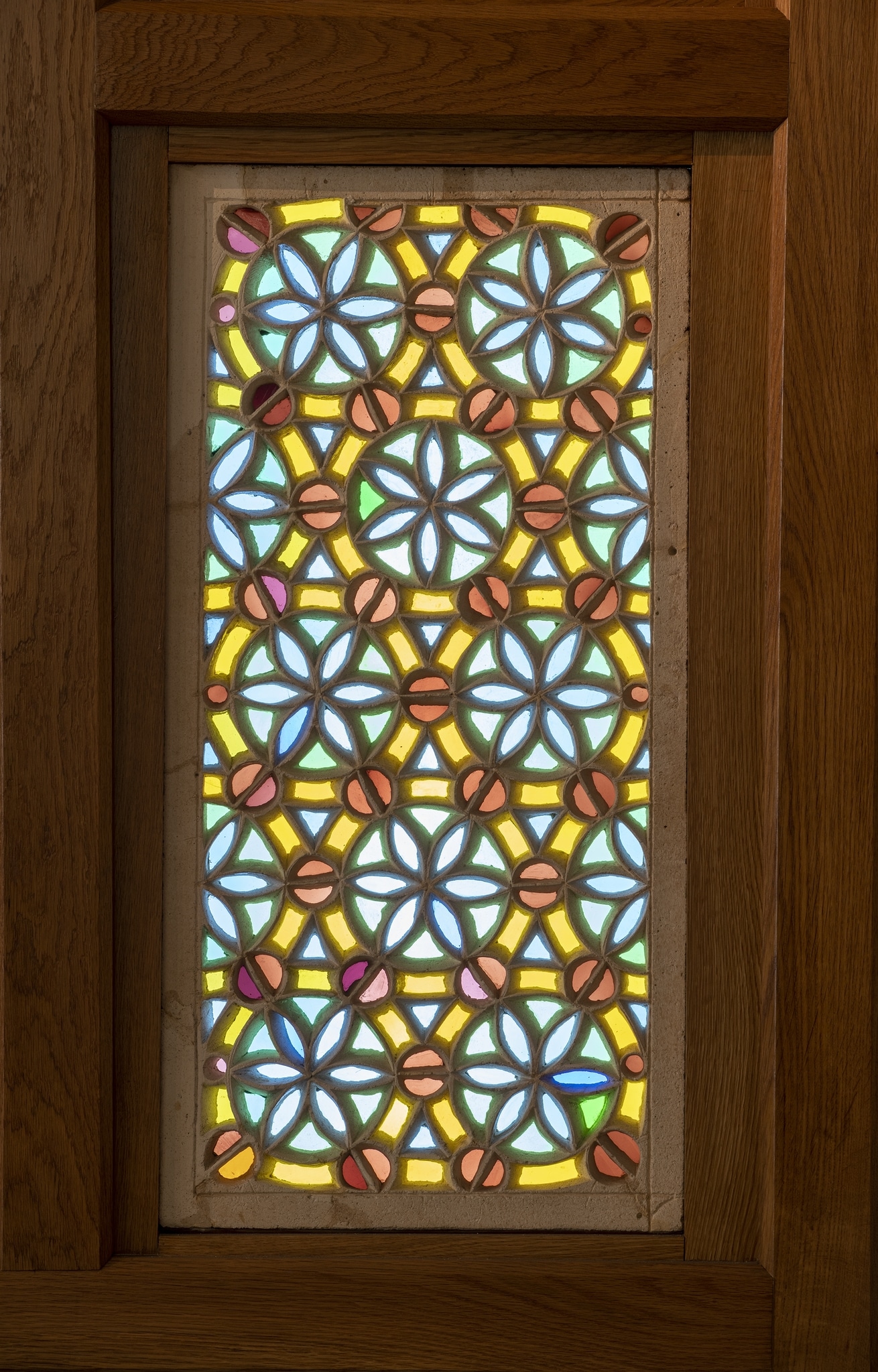
IG_358: qamarīya with geometric decor with six-petaled flowers
(GRC_Athens_BenakiMuseumOfIslamicArt_IG_358)

Kontaktdaten

Bitte geben Sie Ihren Vornamen ein.
Bitte geben Sie Ihren Namen ein.
Bitte geben Sie Ihre E-Mail-Adresse ein.
Die E-Mail-Adresse ist ungültig.

Bitte machen Sie so viele Angaben wie möglich (Titel der Publikation, Datenbank, Herausgeber, Auflage, Erscheinungsjahr, usw.)

Das Vitrocentre Romont kann Ihnen nur eigene Bilder zur Verfügung stellen. Bilder von Dritten können wir Ihnen leider nicht überlassen. Betrifft Ihre Bestellung Fotografien von Drittparteien, senden wir Ihnen die Kontaktadresse, über welche die Bilder bezogen werden können.

Die von Ihnen in diesem Formular angegebenen Personendaten werden vom Vitrocentre Romont ausschliesslich für die Bearbeitung Ihrer Bildbestellung verwendet. Die Korrespondenz zur Bestellung wird zur internen Nachvollziehbarkeit archiviert. Die Daten werden weder für andere als die hier aufgelisteten Zwecke verwendet noch an Dritte weitergegeben. Durch das Absenden des Bestellformulars erklären Sie sich mit dieser Nutzung Ihrer Personendaten einverstanden.

Bei Fragen können Sie gerne eine E-Mail an info@vitrosearch.ch senden.

Titel

Stucco glass window with floral ornamentation

Art des Objekts
Masse
77 x 38 cm (without frame); 88.8 x 48.6 x 3.5 cm (with frame)
Künstler:in / Hersteller:in
Herstellungsort
Datierung
early 13th–early 14th centuries AH / 19th century CE
Standort
Inventarnummer
11050
Forschungsprojekt
Autor:in und Datum des Eintrags
Francine Giese, Sophie Wolf 2025

Ikonografie

Beschreibung

Rectangular stucco and glass window with floral ornamentation consisting of round, six-petalled flowers enclosed in hexagonal frames arranged in a regular grid. The corners of the hexagons are marked by red circles divided by a central line.

Iconclass Code
48A981 · Ornament aus geometrischen Motiven
48A983 · Ornamente, die von pflanzlichen Formen abgeleitet sind
48A9833 · Blumenornamente
49D352(6) · Hexagon, Sechseck
Iconclass Stichworte

Materialien, Technik und Erhaltungszustand

Materialien

Coarse-grained gypsum plaster; coloured glass (several shades of light blue, several shades of red ranging from light to dark purplish red, yellow, and green). The blue and red glass is slightly streaky in places.

Technik

The latticework was carved into a rectangular stucco panel and inlaid with coloured sheet glass. The pieces of glass are fixed on the back of the lattice with a thin layer of gypsum plaster. The average thickness of the stucco panel is 22–24mm. The stucco panel was cast in a wooden frame.

The design of the latticework has been carved out of the stucco panel with sharp, knife-like tools following a template incised in the surface of the panel. Traces of the incisions are still visible in some places on the front. The main design has been worked in such a way that the incident light is directed very slightly downwards into the room, suggesting that the window was installed at mid-height in the room.

The blue, yellow, and green glass is coloured in the mass; the red pieces are probably made from flashed glass. Elongated parallel bubbles indicate that the glass sheets were mouth-blown (most probably cylinder-blown).

Erhaltungszustand und Restaurierungen

The window was thoroughly restored in 2003 and is well preserved. During the restoration, earlier repairs were largely removed. The measures included cleaning the dirty and weathered surface of the stucco lattice (laser cleaning, density: 1.5 J/cm2 at 1064nm), bonding cracks with acrylic resin, and filling lacunae in the stucco lattice with acrylic filler. The repairs were retouched with pigmented acrylic emulsion. In addition, fragile areas were strengthened with gauze and acrylic resin. The original wooden frame was cleaned with solvent and reinforced by adding an aluminium frame. At the time of restoration, around 90% of the original glass was preserved. Missing pieces were replaced with new ones, which were attached with cellulose nitrate.

Entstehungsgeschichte

Forschung

This stucco and glass window shows the characteristics of Islamic ornamentation. The regular layout of repeating elements creates a repetitive surface decoration. The geometric arrangement of the basic elements is strictly maintained. The British architect James William Wild (1814–1892) documented a similar window with a comparable, but slightly simpler design during his stay in Cairo in the years 1844–1847 (IG_439). There are no other examples of such ornamental windows in the collections studied within this project.

From a technical point of view, it can be assumed that the window discussed here was made in an Egyptian workshop. Although the rear of the window was not accessible during our examination, it can be concluded from the restoration report of 2004 that the window was made according to the traditional technique used in the manufacture of qamariyyāt in North Africa to this day (see Technique).

According to the museum records, the window dates to the 16th or 17th century. However, there are some indications that speak against this early date. On the one hand, the abstract design of the spandrels suggests a later dating. On the other hand, the window was in a relatively good state of preservation before restoration in 2003, despite the poor weather resistance of the stucco lattice. If the window had been installed in a building in the 16th or 17th century and been exposed to the weather for two or three centuries, we would have expected it to be more heavily weathered before restoration. Moreover, the pieces of glass show the characteristics of cylinder-blown sheet glass, a technique that was uncommon in the Islamic world at that time and more commonly used in Europe. Interestingly, the Hungarian architect Max Herz (1856–1819) states in 1902 that sheet glass was imported to Egypt from Europe from the 19th century, because local sheet-glass production had come to a standstill (Herz, 1902, p. 53).

The Cairo-based, Cypriot art and antique dealer Phokion Tanos (1898–1972) donated this window – along with 12 other qamariyyāt (11049–11059, 20969, 20960, see IG_336–359), to the Benaki Museum in Athens, probably in the 1940s.

Datierung
early 13th–early 14th centuries AH / 19th century CE
Zeitraum
1800 – 1899
Frühere Standorte
Herstellungsort

Provenienz

Eigentümer:in
Seit 1940 (ca.): Benaki Museum of Islamic Art, Inventar-Nr.: 11050, Athen (Griechenland), Schenkung
Vorbesitzer:in
Von [Eingangsjahr unbekannt] bis 1940 (ca.):

Bibliografie und Quellen

Literatur

Ballian, Anna (ed.) (2006): Benaki Museum. A Guide to the Museum of Islamic Art, Athens, Benaki Museum, pp. 136–137.

Herz, M. (1902). Le musée national du Caire. Gazette des Beaux-Arts, 3. Pér. 28, 45–59, 497–505.

Ausstellungen

since 2004: Room III of the premanent exhibition of the Benaki Museum of Islamic Art, Athens

Bildinformationen

Name des Bildes
GRC_Athens_BenakiMuseumOfIslamicArt_IG_358
Fotonachweise
© 2023 by Benaki Museum Athens

Zitiervorschlag

Giese, F., & Wolf, S. (2025). Stucco glass window with floral ornamentation. In Vitrosearch. Aufgerufen am 5. Dezember 2025 von https://vitrosearch.ch/objects/2713202.

Informationen zum Datensatz

Referenznummer
IG_358