Forschung
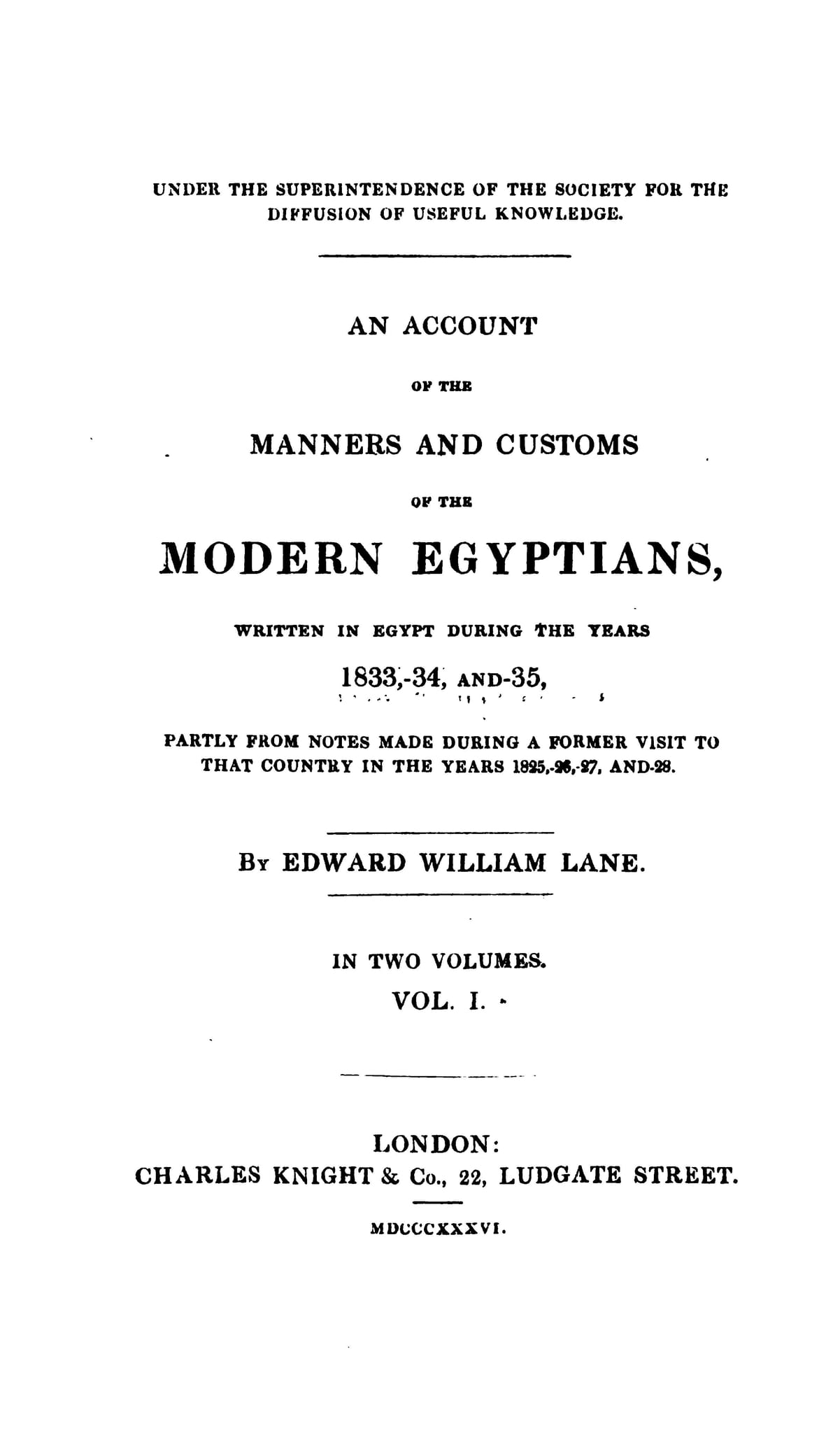
Edward Lane’s book was a comprehensive description of Egypt and its culture. The first edition sold out within a fortnight. It went through four editions within a decade of publication and was the standard authority on its subject for over half a century (Crinson, 1996, p. 28). In 1852, it was translated into German. Architecture is not one of the major subjects in Lane’s book, but in the first chapter, on ‘houses’ (pp. 19–20), a detailed description of stucco and glass windows is included. Together with the account of the glass-painter Etienne Thevenot (IG_90), this is the oldest known detailed description of stucco and glass windows.
Lane states, that ‘in several of the upper rooms, in the houses of the wealthy, there are, besides the windows of lattice-work, others of coloured glass, representing bunches of flowers, peacocks, and other gay and gaudy objects, or merely fanciful patterns, which have a pleasing effect.’ He gives approximate measurements and a brief description of the manufacturing technique. In another chapter, on ‘industry’, he observes, that ‘the art of glass-making, for which Egypt was so much celebrated in ancient times’, was lost. He continues, that nonetheless such windows were still made and admired, ‘though not so much as they were a few years ago, before the adoption of a new style of architecture diminished the demand for their work.’ (Lane, 1936, vol. 2, p. 3).
None of the illustrations shows windows. However, among the many drawings Lane had made during his stay in Egypt 1825–1828 is a detailed sketch of a stucco and glass window (IG_490).
Datierung
1836
Herstellungsort